



Description
Research-Focused Benefits
• Multi-Pathway Metabolic Modeling
AOD-9604 is used in studies reviewing fat-breakdown signaling and metabolic-regulation pathways.
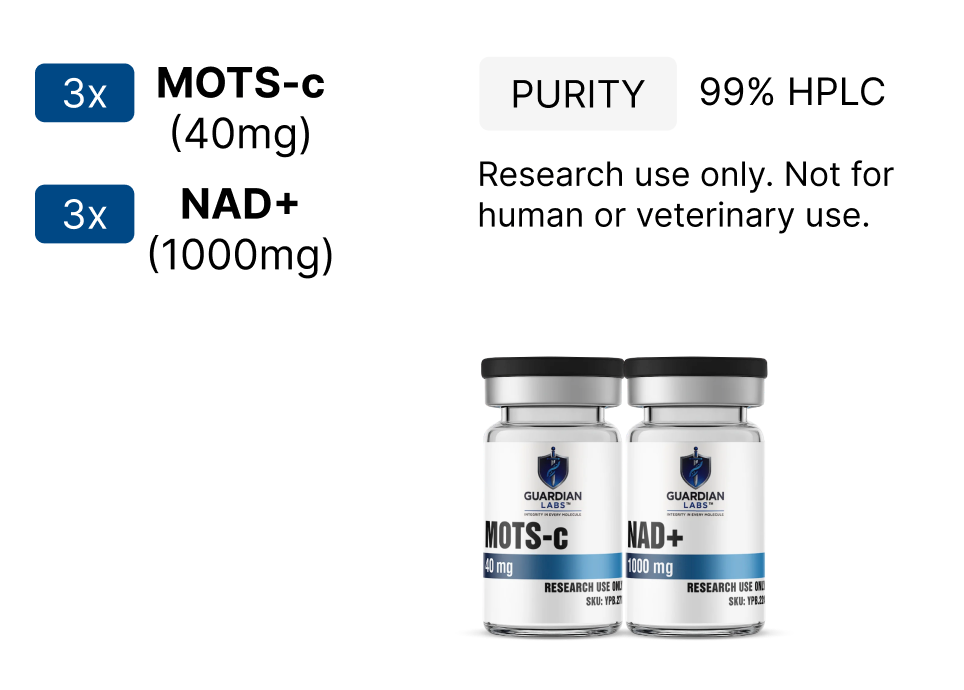
MOTS-C models explore mitochondrial output, AMPK behavior and energy-use efficiency.
GLP-1 R peptides are used in research examining appetite-signaling behavior, nutrient handling and metabolic-rate pathways.
• Triple-System Synergy
Researchers pair these three to observe how lipolysis signaling, mitochondrial function, and GLP-1 pathway activity interact in the same controlled setup.
• Energy-Balance & Fat-Oxidation Designs
This bundle is used in non-clinical models reviewing substrate use, fatty-acid mobilization and cellular energy availability.
• Comprehensive Metabolic Modeling
Together they create a unified research system for observing fat metabolism, energy turnover, cellular resilience, and metabolic optimization.
Common Research Patterns
Exposure Ranges
Non-clinical studies often explore:
• AOD-9604: 250–500 mcg per session
• MOTS-C: 5–15 mg per session
• GLP-1 R (each vial): 250 mcg– 2.5 mg per week
Timing
Most research designs introduce each component once per session, with GLP-1 R models commonly using weekly exposure.
Frequency
Typical schedules run 5 to 7 sessions per week, depending on model objectives.
(GLP-1 R components remain once per week within that cycle.)
Cycle Duration
Observation cycles commonly span 4 to 8 weeks, followed by a 2 to 4 week pause before the next phase.
RUO Disclaimer
For laboratory research only. Not for human use. Not medical advice.


Reviews
There are no reviews yet.