



Description
Research-Focused Benefits
• Full-Spectrum Cellular Models
Epithalon is used in studies reviewing gene-expression behavior and cellular-maintenance pathways.
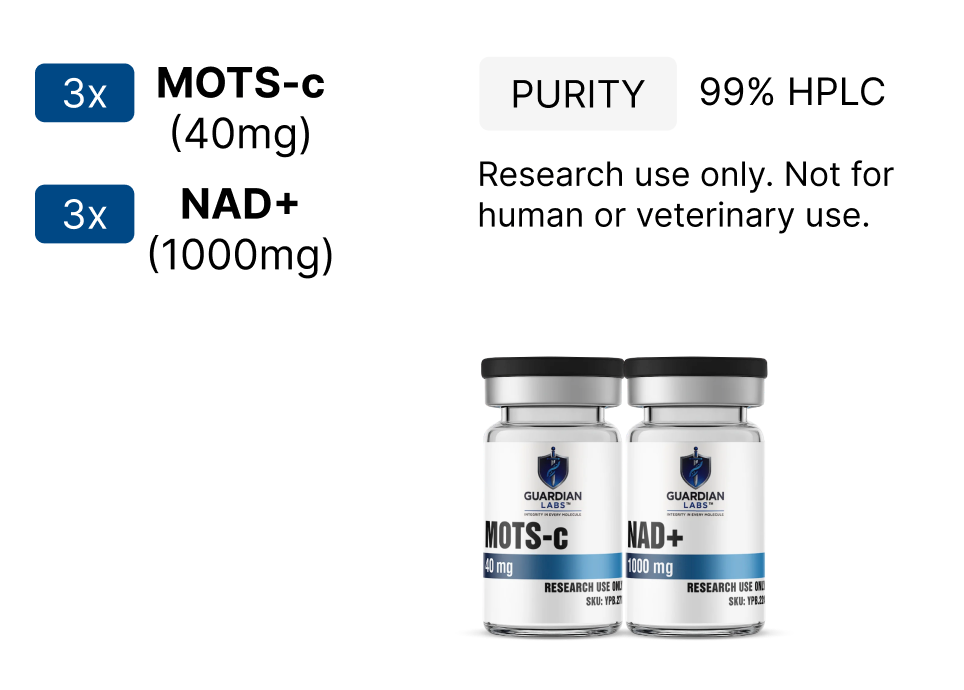
MOTS-C models explore mitochondrial signaling and metabolic efficiency.
NAD+ models examine energy production, redox balance and cellular resilience.
• Longevity + Metabolism Synergy
Researchers pair these molecules to observe how gene regulation, mitochondrial output and cellular energy systems interact in the same controlled setup.
• Stress-Response and Recovery Environments
The trio is used in non-clinical designs to review oxidative-stress balance, cellular defense behavior and tissue-support pathways.
• Comprehensive Vitality Modeling
Together they create a unified research system for observing aging pathways, metabolic support and cellular stability.
Common Research Patterns
Exposure Ranges
Non-clinical studies often explore:
• Epithalon: 5–15 mg per session
• MOTS-C: 5–15 mg per session
• NAD+: 50–500 mg per session
Timing
Most designs introduce each component once per session during the model’s active phase.
Frequency
Typical schedules run 5 to 7 sessions per week, depending on study objectives.
Cycle Duration
Observation cycles commonly span 10 to 20 days, followed by a 2 to 4 week pause before the next research phase.
RUO Disclaimer
For laboratory research only. Not for human use. Not medical advice.


Reviews
There are no reviews yet.