


Description
Endurance & Energy
Starter Bundle
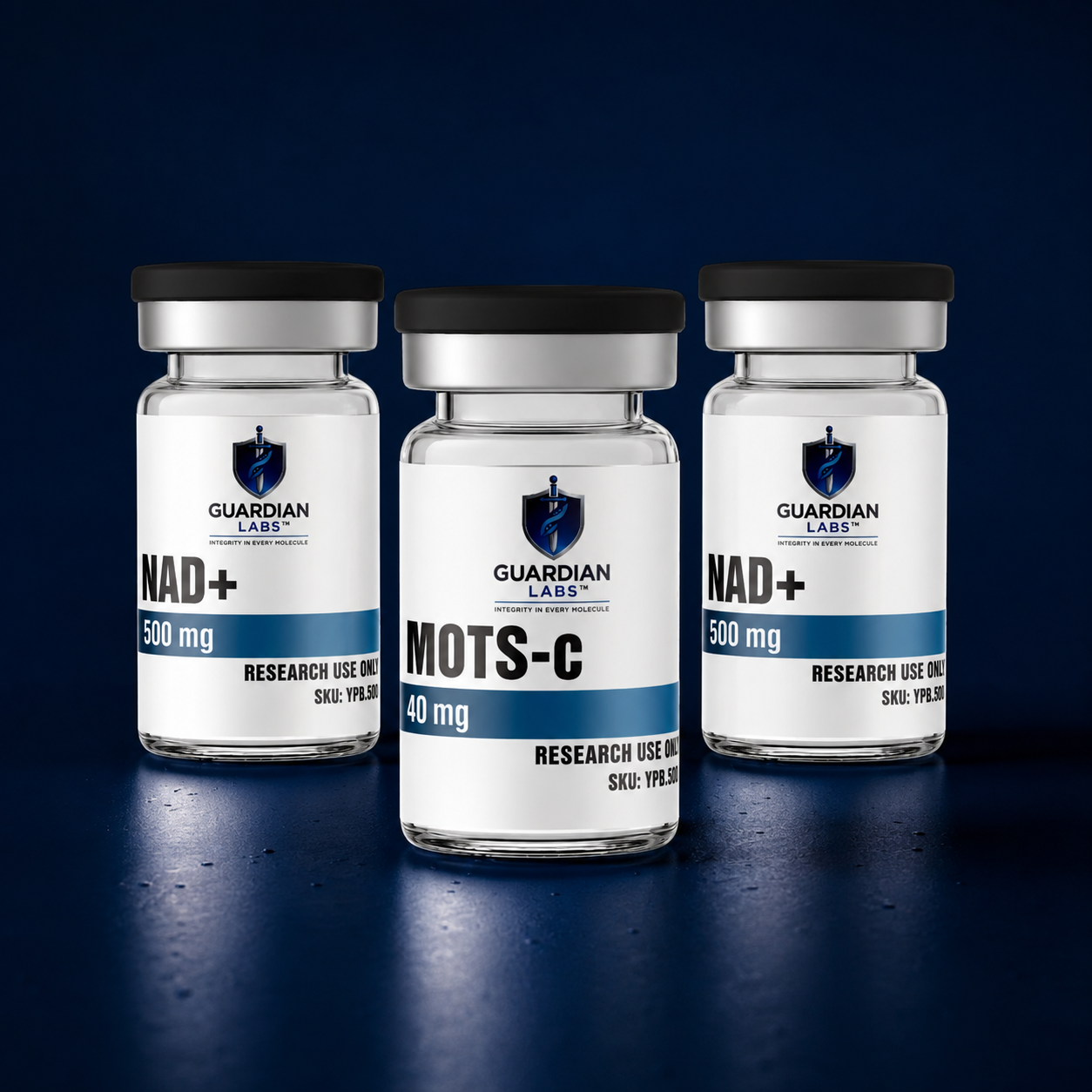
A starter stack for cellular energy and endurance — pairing the mitochondrial-derived peptide MOTS-c, a metabolic “exercise mimetic,” with NAD+, the coenzyme that powers mitochondrial ATP production. Two angles on the same engine.
Save $18.98 on this 3-vial MOTS-c + NAD+ starter stack for endurance and cellular-energy research. For research use only.
Signal the energy programs — then supply the fuel they spend.
| Endurance runs on the mitochondria, and this starter bundle addresses that engine from two directions. MOTS-c is a mitochondrial-derived peptide that activates AMPK — the cell’s master energy sensor — and reproduces many of the metabolic signals triggered by physical exercise. NAD+ is the coenzyme that carries the electrons driving ATP production, the actual currency those programs run on.
Both compounds sit at the mitochondrial core, and both decline with age. Supplied together as research-grade lyophilized powder — HPLC-verified above ninety-nine percent purity and lot-verified — they form a clean entry point for endurance, metabolic, and cellular-energy research. |
MOTS-c tells the cell to run its energy and endurance programs; NAD+ supplies the fuel those programs consume. One is the signal, the other is the currency.
|
Two compounds, three vials — content per bundle.
×1 · 40 mg
MOTS-cMitochondrial-Derived Peptide · 16 Amino Acids A 16-amino acid peptide encoded within the mitochondrial 12S rRNA. MOTS-c activates AMPK, enhances glucose metabolism and fat oxidation, and reproduces key metabolic signals of exercise — earning it the label “exercise mimetic.” Circulating levels decline with age. |
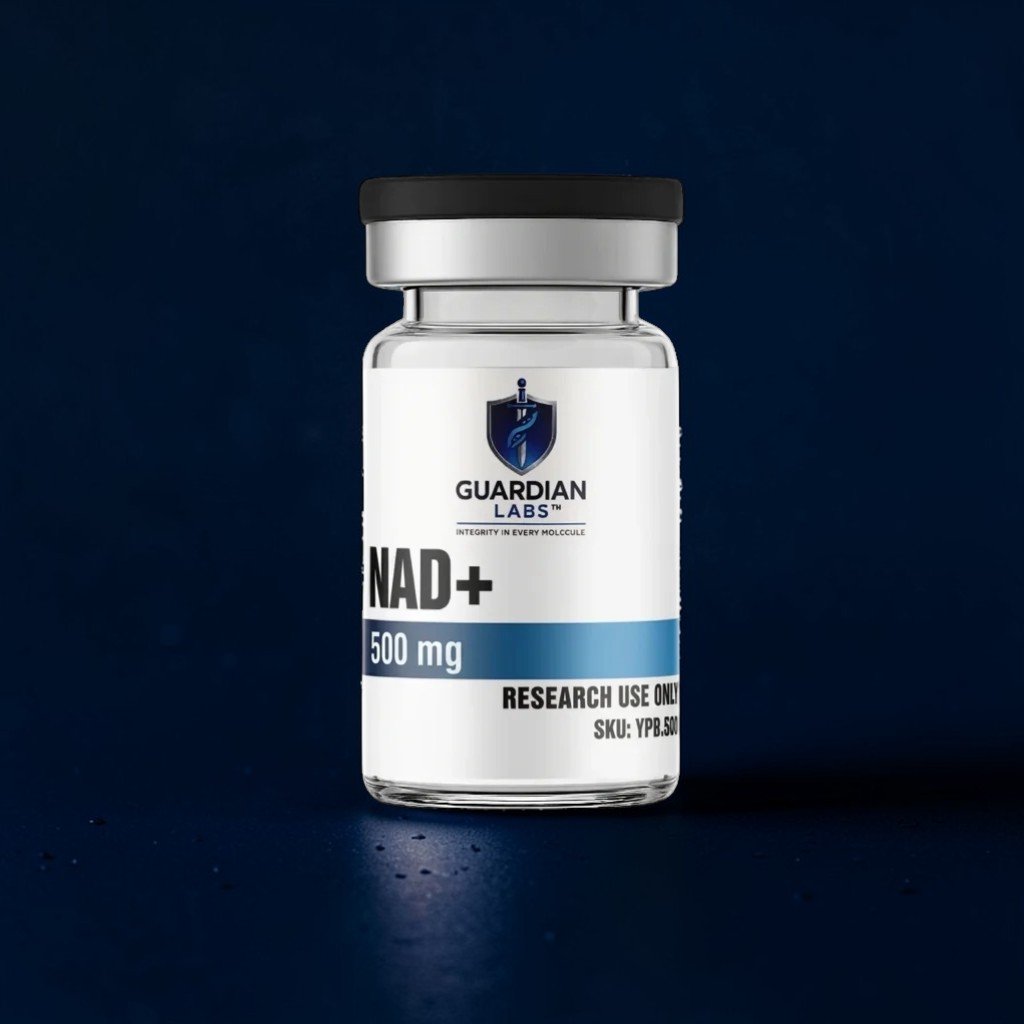
×2 · 500 mg
NAD+Coenzyme · β-Nicotinamide Adenine Dinucleotide The coenzyme at the center of mitochondrial ATP production, DNA repair, and sirtuin signaling. NAD+ is the electron carrier that powers oxidative phosphorylation — the cellular energy currency the metabolic programs above depend on. Two vials included. |
Four steps — from metabolic signal to sustained energy output.
i
AMPK ActivationMOTS-c inhibits the folate cycle and de novo purine synthesis, accumulating AICAR to switch on AMPK — the master energy-sensing regulator of the cell. |
ii
Exercise-Mimetic SignalThrough AMPK, MOTS-c drives glucose uptake, fat oxidation, and metabolic adaptations that overlap with those induced by physical exercise. |
iii
Mitochondrial FuelNAD+ carries the electrons that power oxidative phosphorylation and ATP synthesis, and serves as the substrate that sirtuins and PARP enzymes consume. |
iv
Stress AdaptationUnder metabolic stress, MOTS-c translocates to the nucleus to regulate antioxidant gene expression, while NAD+ sustains the redox and repair machinery. |
On Pairing
The logic of the bundle is signal plus substrate. MOTS-c instructs the cell to run its energy and endurance programs; NAD+ supplies the currency those programs spend. Both sit at the mitochondrial core and both fall with age — which is why they pair naturally as an entry point for endurance and cellular-energy research.
Primary subjects of investigation — strictly laboratory use.
A.01
Endurance & ExerciseStudies of exercise-mimetic signaling, work capacity, and fat oxidation under AMPK activation. |
A.02
Metabolic & InsulinResearch into glucose metabolism, insulin sensitivity, and metabolic homeostasis in diet-induced models. |
A.03
Mitochondrial FunctionInvestigating NAD+-dependent bioenergetics, oxidative phosphorylation efficiency, and mitochondrial biogenesis. |
A.04
Aging & Energy DeclineExamining the age-related fall in MOTS-c and NAD+ and its consequences for cellular energy capacity. |
Peer-reviewed literature supporting the components of this bundle.
| i. |
MOTS-c & Metabolic HomeostasisThe foundational study identifying MOTS-c as a mitochondrial-derived peptide that activates AMPK, promotes metabolic homeostasis, and reduces obesity and insulin resistance in mouse models. |
View on PubMed → |
| ii. |
MOTS-c Nuclear TranslocationResearch demonstrating that under metabolic stress MOTS-c translocates to the nucleus to regulate nuclear gene expression, including antioxidant response pathways — extending its role beyond the mitochondrion. |
View on PubMed → |
| iii. |
Age-Related Decline of NAD+A foundational study showing tissue NAD+ levels fall substantially with age, with measurable consequences for mitochondrial function and bioenergetic capacity. |
View on PubMed → |
| iv. |
Mitochondrial-Derived Peptides & AgingA review of the mitochondrial-derived peptide family, positioning MOTS-c as a “mitokine” that signals metabolic status and declines with age — a growing line of geroscience inquiry. |
View on PubMed → |
Certificate of analysis available upon request for each compound.
| Bundle | Endurance & Energy Starter Bundle · 3 vials |
| MOTS-c ×1 | 40 mg · MW 2174.64 g/mol · CAS 1627580-64-6 |
| MOTS-c Sequence | Met-Arg-Trp-Gln-Glu-Met-Gly-Tyr-Ile-Phe-Tyr-Pro-Arg-Lys-Leu-Arg |
| NAD+ ×2 | 500 mg each · MW 663.43 g/mol · CAS 53-84-9 |
| Format | Lyophilized Powder (Freeze-dried) |
| Purity | > 99% (HPLC Verified) |
| Storage — Unreconstituted | Store at −20°C · Protect from light |
| Storage — Reconstituted | Refrigerate at 2–8°C · Do not freeze |
| Reconstitution | Bacteriostatic Water |
All products listed are intended exclusively for laboratory research and development purposes. They are not intended for human consumption, diagnostic, or therapeutic use. Customers must be at least 21 years of age to purchase.