
Description
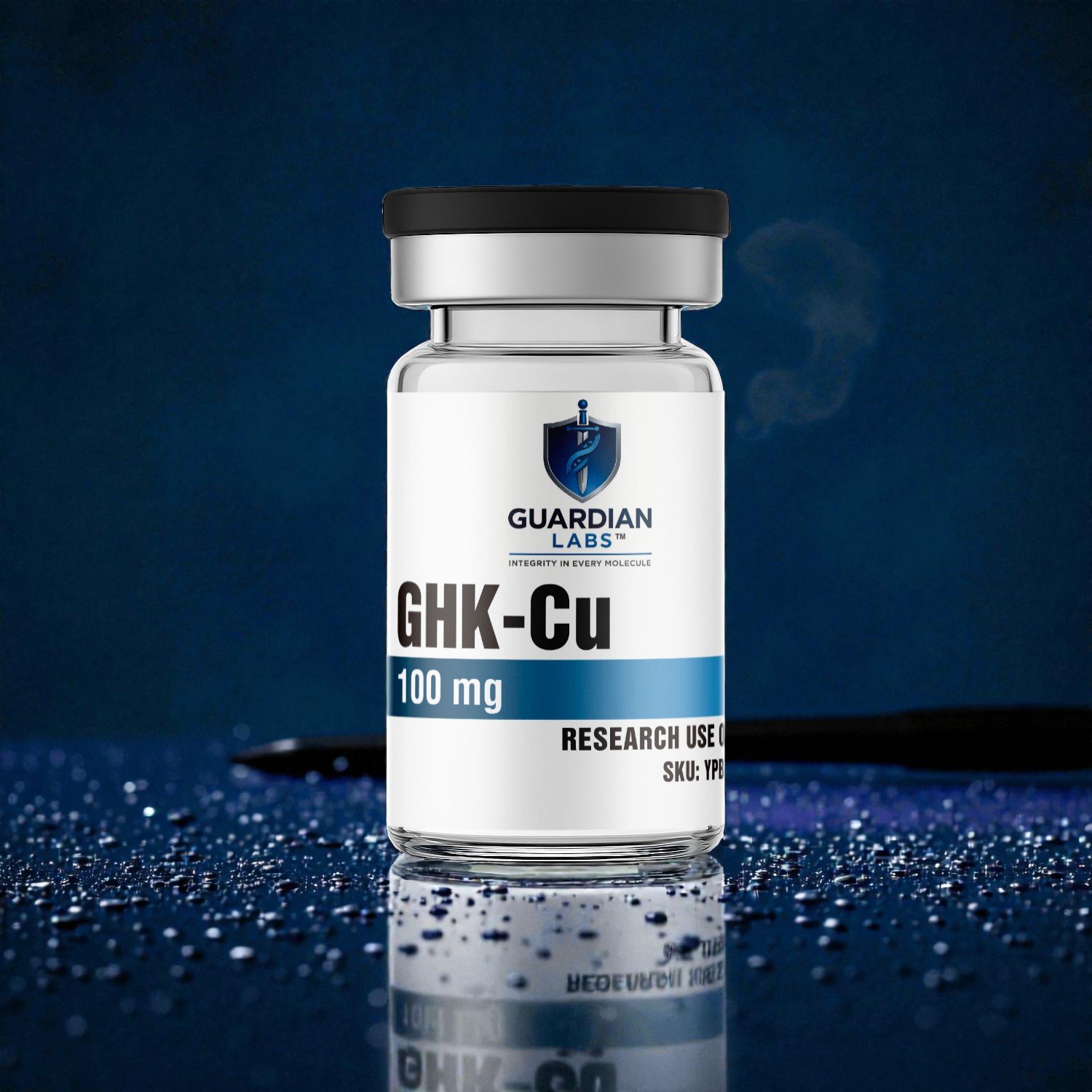
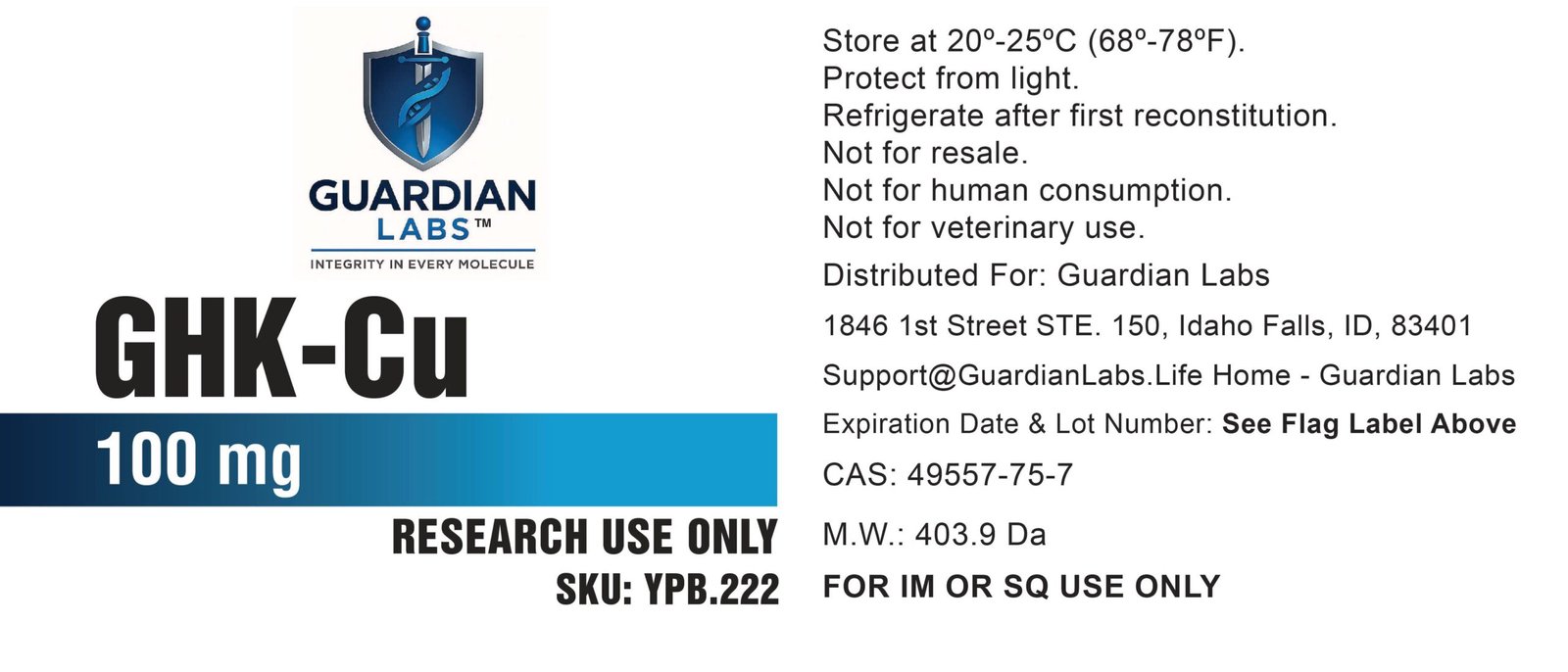
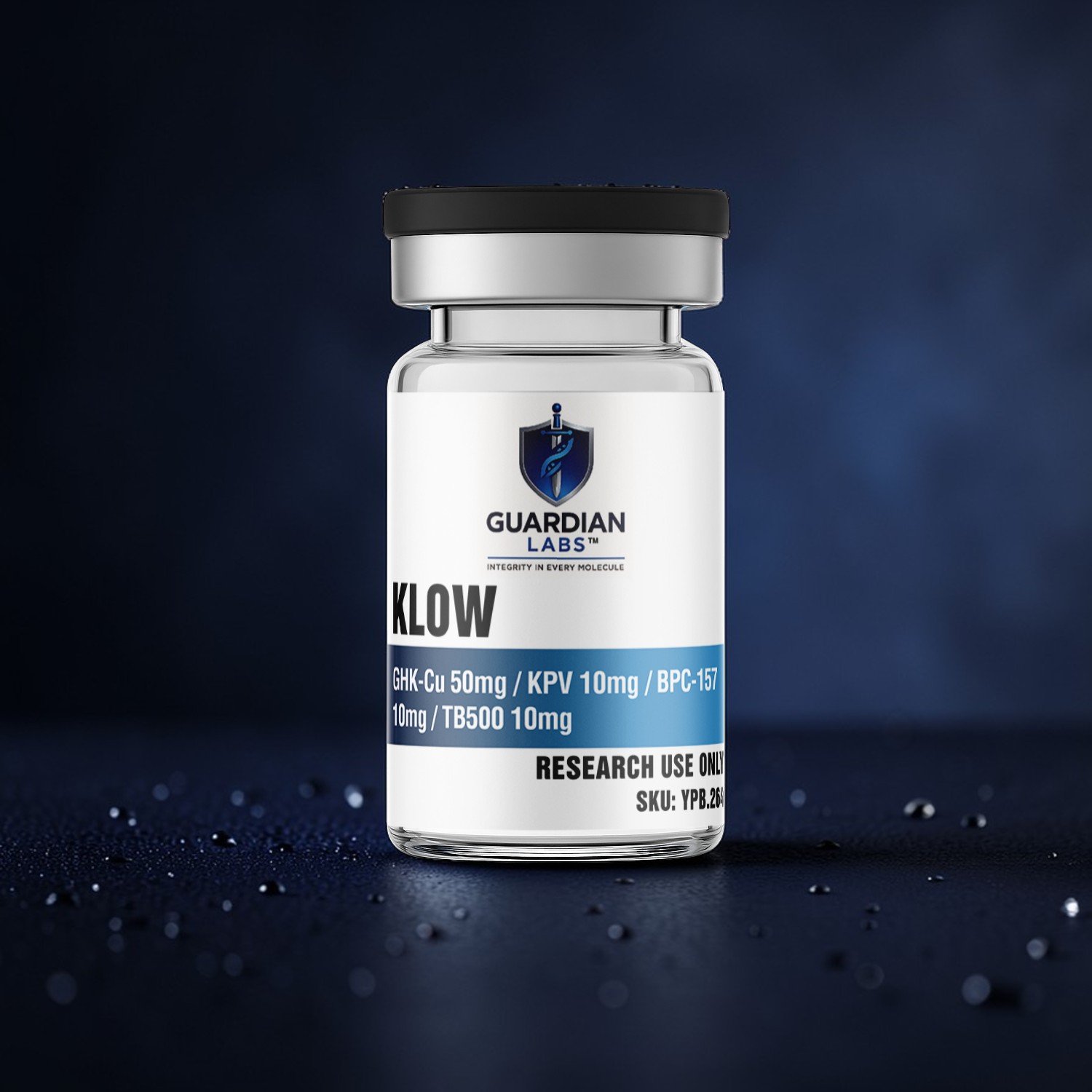
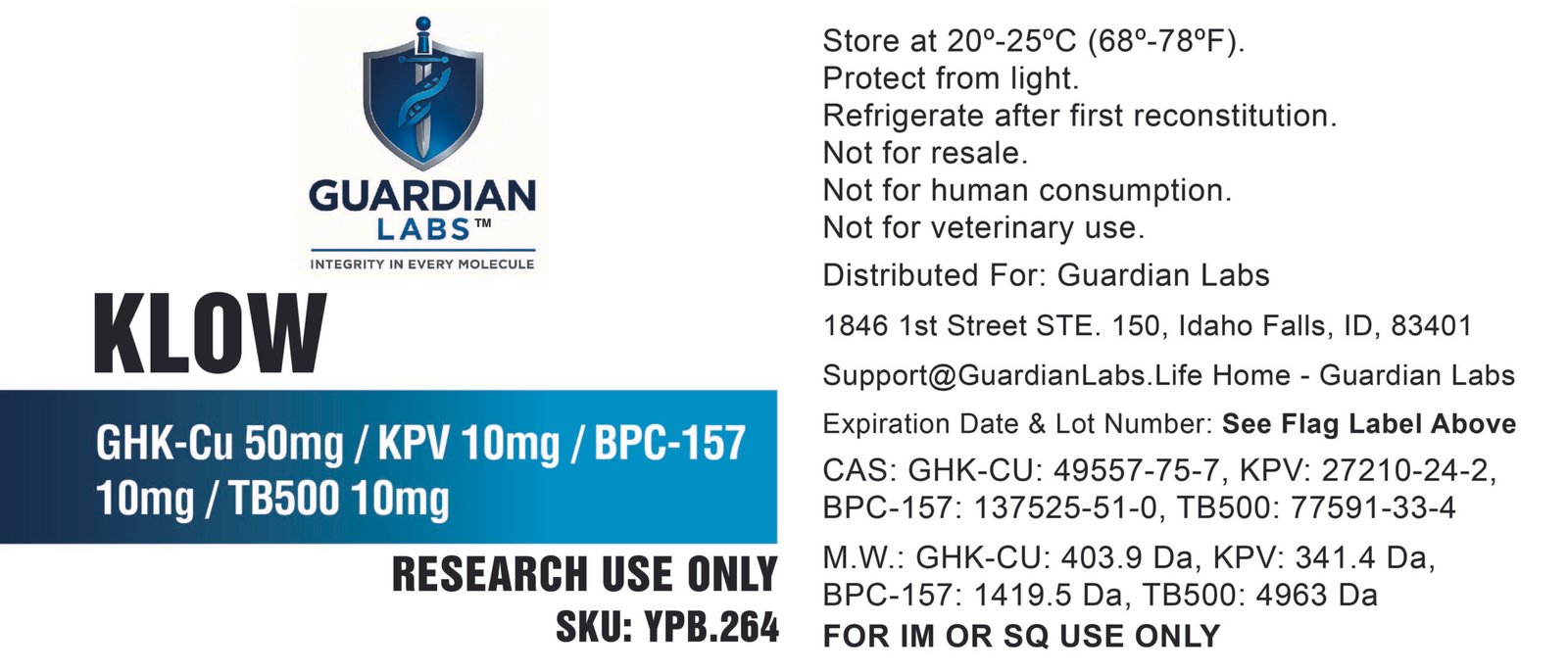
GHK-Cu
Copper Tripeptide-1
A naturally occurring tripeptide of glycine, histidine, and lysine bound to a copper(II) ion — one of the most extensively studied compounds in regenerative skin and tissue research.
A naturally occurring copper-binding tripeptide present in human plasma.
|
GHK-Cu is a small naturally occurring tripeptide (Glycyl-L-Histidyl-L-Lysine) that forms a strong complex with copper(II) ions. First isolated from human plasma in the 1970s, it has since been the subject of more than two hundred peer-reviewed publications spanning skin regeneration, wound healing, hair follicle biology, and gene expression. At Guardian Labs, we provide research-grade GHK-Cu rigorously tested to ensure purity exceeding ninety-nine percent — ensuring your laboratory data regarding tissue regeneration and copper-mediated cellular signalling remains accurate and reproducible. |
Plasma GHK-Cu levels in humans decline from approximately 200 ng/mL in early adulthood to under 80 ng/mL by age sixty — a decline that has positioned GHK-Cu among the most studied molecules in regenerative research.
|
A copper carrier with broad regulatory activity across cell types.
i
Copper DeliveryActs as a physiological carrier of copper(II), enabling uptake by cells where copper is required for enzymatic activity and redox balance. |
ii
Gene ExpressionModulates the expression of thousands of genes — with notable effects on those governing collagen, elastin, and tissue-repair pathways. |
iii
Extracellular MatrixStimulates production of collagen, elastin, glycosaminoglycans, and decorin, supporting structural integrity and dermal remodeling. |
iv
Antioxidant & Anti-InflammatorySuppresses pro-inflammatory cytokines and quenches reactive oxygen species, reducing oxidative damage in injured tissue models. |
On the Copper Complex
What distinguishes GHK-Cu from the free GHK tripeptide is its ability to bind copper(II) with extraordinary affinity. The copper is what unlocks the molecule’s regenerative profile — without it, GHK alone shows substantially reduced activity in most laboratory models.
Primary subjects of investigation — strictly laboratory use.
A.01Skin & Dermal RepairResearch into collagen and elastin synthesis, dermal remodeling, photoaging models, and the regenerative response of fibroblasts. |
A.02Hair Follicle BiologyStudies on follicle stimulation, dermal papilla cell proliferation, and the gene-expression patterns associated with hair growth. |
A.03Wound HealingInvestigations into accelerated wound closure, granulation tissue formation, and angiogenesis in cutaneous and dermal injury models. |
A.04Gene ExpressionGenomic analyses of GHK-Cu’s broad effect on gene transcription — influencing pathways from DNA repair to tumour-suppressor activity. |
Peer-reviewed literature supporting the research potential of this peptide.
| i. |
Skin Regeneration & PhotoagingFoundational research demonstrated that topical GHK-Cu administration improved skin firmness, density, and clarity in models of photoaged dermal tissue — with associated increases in collagen synthesis and dermal matrix protein expression. |
View on PubMed → |
| ii. |
Wound Healing & Tissue RepairA series of studies in wound closure models reported that GHK-Cu accelerated re-epithelialization, enhanced granulation tissue formation, and promoted angiogenesis — consistent with its long-recognized role in copper-mediated tissue repair. |
View on PubMed → |
| iii. |
Hair Follicle StimulationInvestigators reported that GHK-Cu enhanced dermal papilla cell proliferation and modulated the gene-expression signature associated with the anagen phase of hair growth, supporting research into follicle stimulation models. |
View on PubMed → |
| iv. |
Genomic & Transcriptomic EffectsA landmark transcriptomic analysis demonstrated that GHK-Cu modulates expression in over four thousand human genes, including those involved in DNA repair, antioxidant response, and tumour-suppressor pathways — redefining its scope beyond a regenerative peptide. |
View on PubMed → |
Certificate of analysis available upon request.
| Sequence | Glycyl-L-Histidyl-L-Lysine : Cu(II) |
| Molecular Formula | C₁₄H₂₄N₆O₄ · Cu |
| Molecular Weight | 402.92 g/mol |
| CAS Number | 89030-95-5 |
| Format | Lyophilized Powder (Freeze-dried) |
| Vial Size | 100 mg |
| Purity | > 99% (HPLC Verified) |
| Storage | Store at −20°C |
| Reconstitution | Bacteriostatic Water |
All products listed are intended exclusively for laboratory research and development purposes. They are not intended for human consumption, diagnostic, or therapeutic use. Customers must be at least 18 years of age to purchase.
Reviews
There are no reviews yet.