

Description
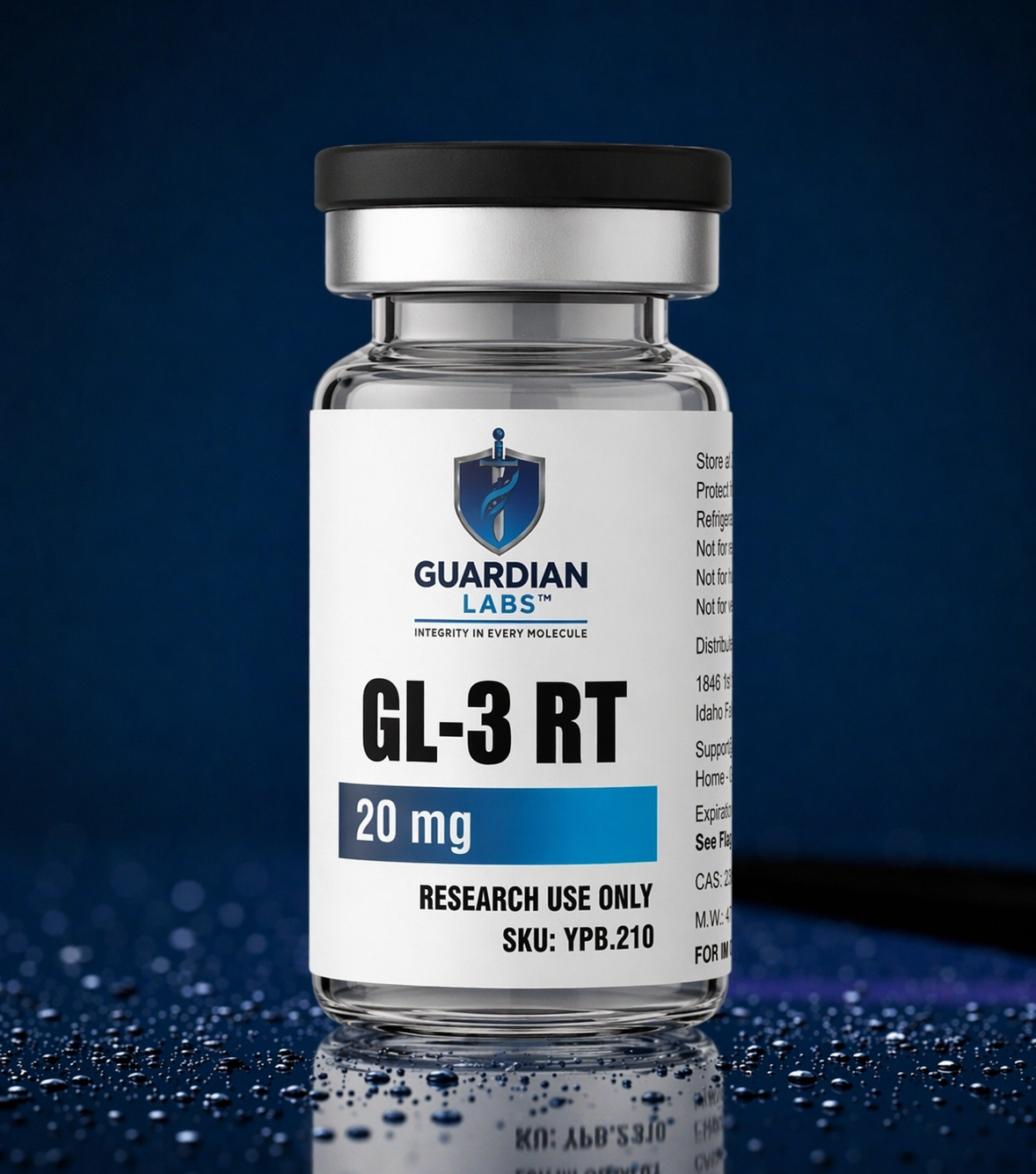
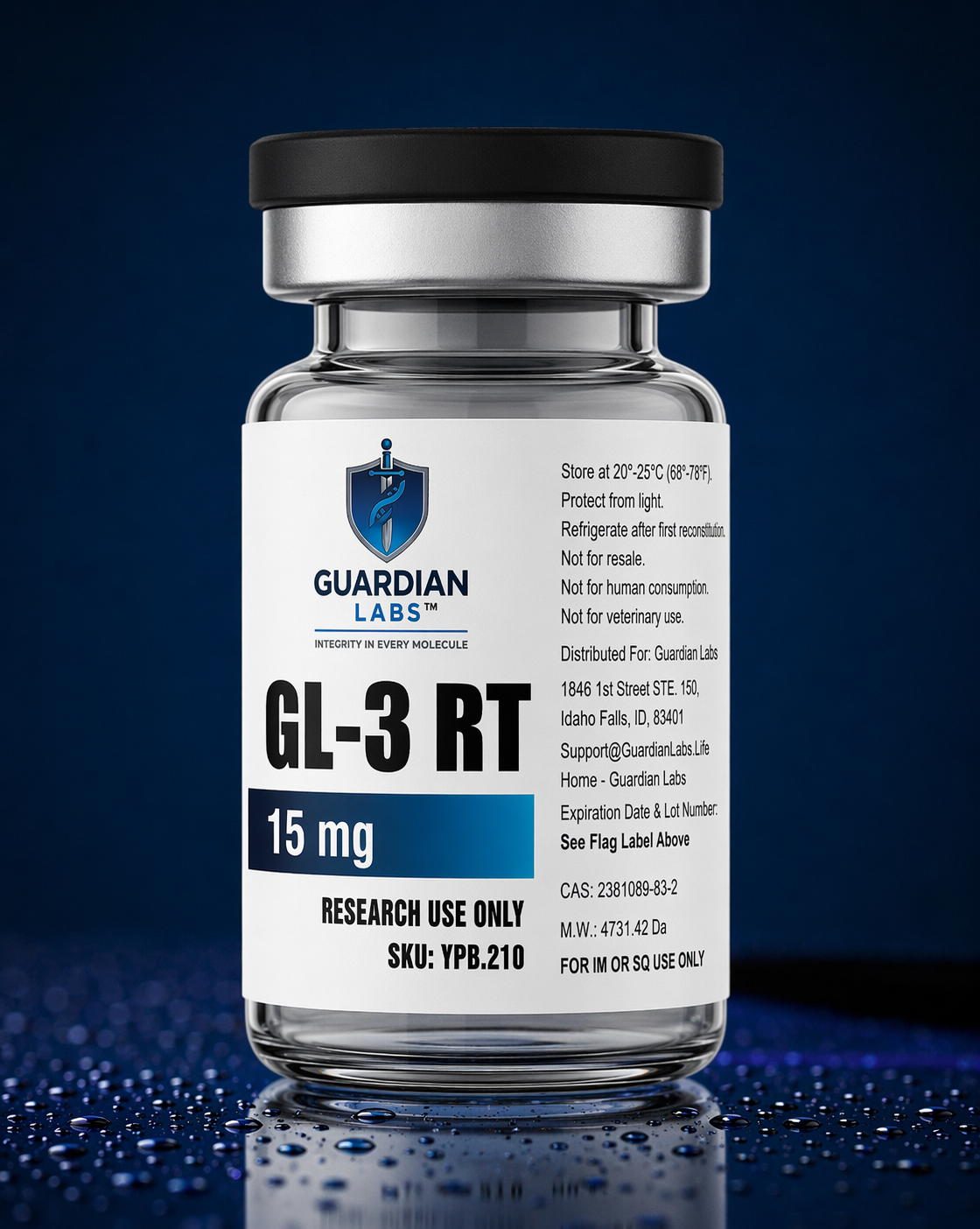
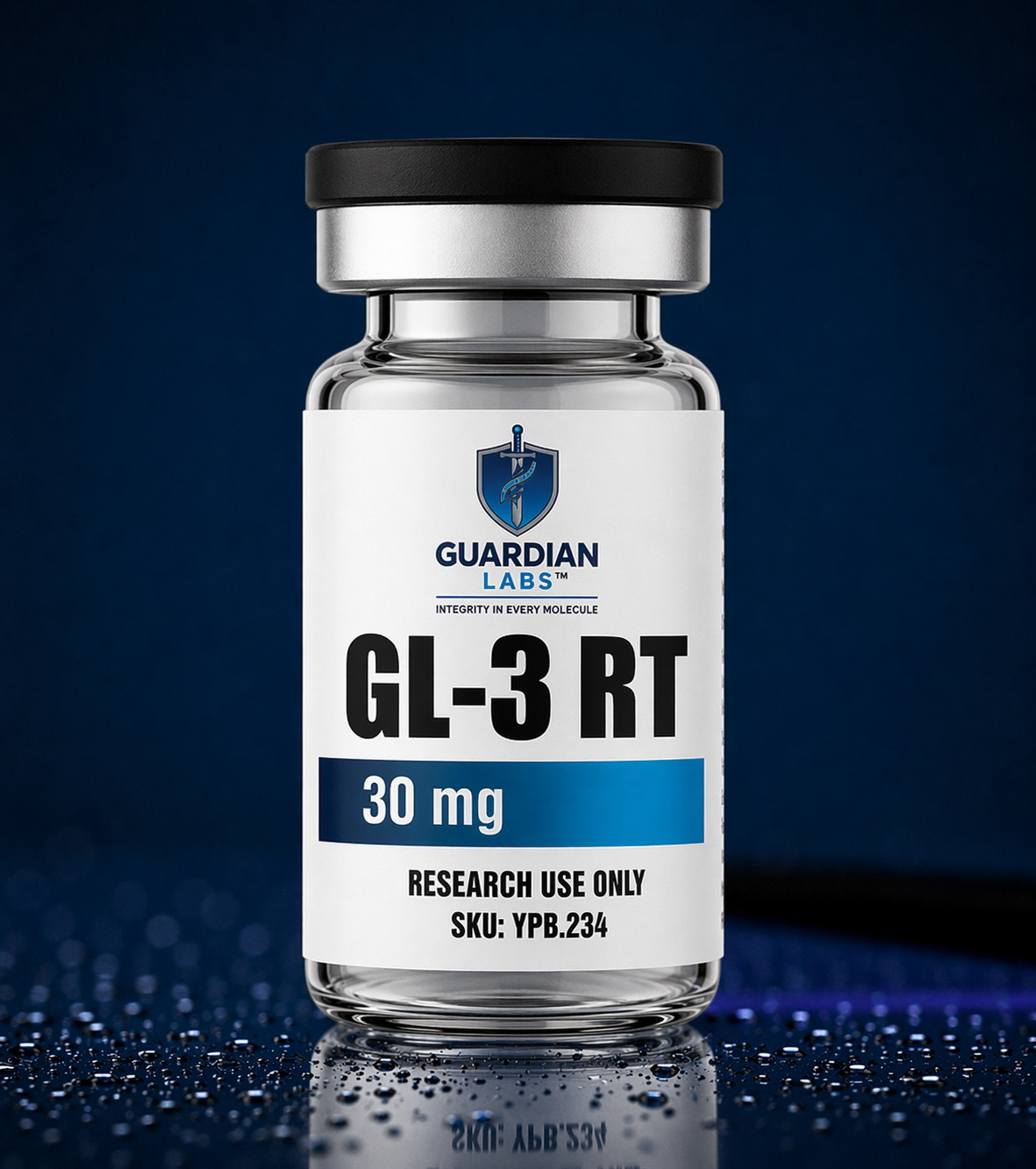
GL-3 RT
Triple-Receptor Research Peptide
A next-generation synthetic peptide engineered as a unimolecular agonist of three metabolic receptors simultaneously — a new frontier in metabolic and obesity research.
| 15 mgVial | 20 mgVial | 30 mgVial | 40 mgVial |
A unimolecular tri-agonist — engineered to target three metabolic pathways at once.
|
GL-3 RT is a synthetic peptide engineered as a single-molecule agonist of three distinct metabolic receptors simultaneously: GLP-1, GIP, and the glucagon receptor. By engaging all three pathways in a coordinated manner, the peptide produces effects that are not observed with single- or dual-receptor agonists, and it has rapidly become a central subject of contemporary metabolic and obesity research. At Guardian Labs, we provide research-grade GL-3 RT rigorously tested to ensure purity exceeding ninety-nine percent — ensuring your laboratory data regarding metabolic homeostasis, energy expenditure, and body composition remains accurate and reproducible. |
By recruiting GLP-1, GIP, and glucagon signalling within a single molecule, GL-3 RT represents a step beyond previous incretin research — engaging satiety, insulin sensitivity, and energy expenditure in concert.
|
Three receptors, one molecule — how the tri-agonist orchestrates a metabolic response.
i
GLP-1 ReceptorActivation of the GLP-1 receptor enhances glucose-dependent insulin secretion, slows gastric emptying, and reduces appetite via central satiety pathways. |
ii
GIP ReceptorEngagement of the glucose-dependent insulinotropic polypeptide receptor improves insulin sensitivity and adipose tissue function in metabolic models. |
iii
Glucagon ReceptorGlucagon receptor agonism increases resting energy expenditure and stimulates hepatic lipid metabolism — the third arm of the tri-agonist effect. |
On Tri-Agonism
What distinguishes GL-3 RT from single-receptor (GLP-1) and dual-receptor (GLP-1/GIP) agonists is the addition of glucagon receptor activity. The glucagon arm contributes to increased energy expenditure — a thermogenic component absent from earlier-generation peptides — and is widely viewed as the mechanism underlying its observed efficacy in advanced metabolic research.
Primary subjects of investigation — strictly laboratory use.
A.01Body CompositionStudies on the reduction of adipose tissue mass, visceral fat depots, and metabolic markers in diet-induced obesity models. |
A.02Glycemic ControlInvestigations into glucose homeostasis, insulin sensitivity, and pancreatic beta-cell function in metabolic dysfunction models. |
A.03Energy ExpenditureResearch into glucagon-mediated thermogenesis, basal metabolic rate, and whole-body energy balance. |
A.04Hepatic FunctionStudies of hepatic lipid metabolism, fatty liver models, and the effect of multi-receptor agonism on liver tissue composition. |
Peer-reviewed literature supporting the research potential of this peptide.
| i. |
Tri-Agonism & Body CompositionA landmark phase 2 investigation reported that triple-receptor agonist administration produced substantial reductions in body mass index and adipose tissue volume in subjects with obesity — with effects exceeding those previously observed with single- and dual-receptor compounds. |
View on PubMed → |
| ii. |
Glycemic OutcomesInvestigators reported significant improvements in glycated hemoglobin and fasting glucose markers in metabolic dysfunction models, with concurrent enhancements in insulin sensitivity attributable to combined GLP-1 and GIP receptor engagement. |
View on PubMed → |
| iii. |
Energy Expenditure & ThermogenesisMechanistic research into the glucagon-receptor arm reported increased basal metabolic rate and enhanced thermogenic activity — supporting the hypothesis that the glucagon component is central to the molecule’s superior body-composition outcomes. |
View on PubMed → |
| iv. |
Hepatic Steatosis ReductionAn exploratory analysis examining hepatic outcomes reported significant reductions in liver fat fraction and improvements in liver enzyme markers — consistent with the proposed role of glucagon-receptor agonism in hepatic lipid metabolism. |
View on PubMed → |
Certificate of analysis available upon request.
| Class | Synthetic Tri-Agonist Peptide |
| Receptor Targets | GLP-1 / GIP / Glucagon |
| Format | Lyophilized Powder (Freeze-dried) |
| Vial Sizes | 15 mg / 20 mg / 30 mg / 40 mg |
| Purity | > 99% (HPLC Verified) |
| Storage | Store at −20°C |
| Reconstitution | Bacteriostatic Water |
All products listed are intended exclusively for laboratory research and development purposes. They are not intended for human consumption, diagnostic, or therapeutic use. Customers must be at least 18 years of age to purchase.






Reviews
There are no reviews yet.