8-Week Total Recovery Stack

Original price was: $668.94.Current price is: $578.99.

Product Left: 2

Stack More. Save More.
  • 3+ vials: 5% off
  • 5+ vials: 10% off
  • 10+ vials: 15% off
Discounts apply automatically in your cart. Mix and match eligible vials to qualify.

ResearchRecovery ProtocolLot Verified

8-Week Total Recovery System

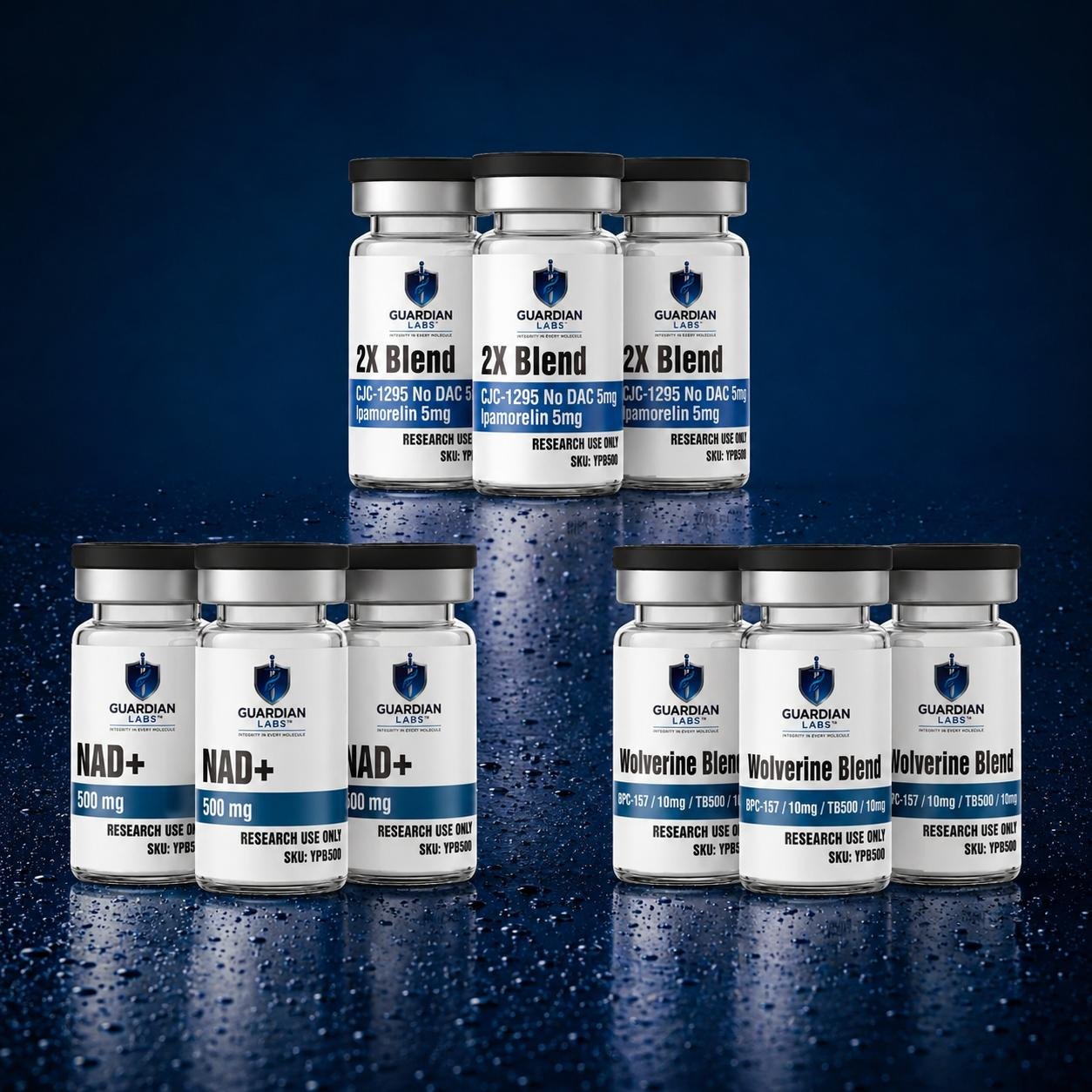
A complete nine-vial research protocol pairing three complementary compounds — tissue-repair peptides, a dual-pathway growth-hormone secretagogue, and the cellular coenzyme NAD+ — to address recovery structurally, hormonally, and at the cellular level across a full eight-week arc.

9-Vial System> 99% PurityHPLC Verified8-Week Protocol

9Total Vials
3Compounds
8 wkProtocol
> 99%HPLC Purity

Retail Value$668.94
Bundle Price$578.99
You Save$89.95

Save $89.95 with this complete 9-vial, 8-week recovery research bundle. For research use only.

§ 01 — The System

Recovery is not one problem — so this is not one compound.

Real tissue recovery unfolds on three fronts at once: the structure has to be rebuilt, the signal to grow has to be present, and the cells doing the work have to be fully powered. Addressing only one of those leaves the process under-resourced. This system supplies all three, together, across an eight-week arc.

The Wolverine Blend drives structural repair. The CJC-1295 / Ipamorelin stack amplifies growth-hormone and IGF-1 signaling. NAD+ fuels the energy-intensive cellular machinery behind both. Every vial is research-grade, HPLC-verified above ninety-nine percent purity, and lot-verified for reproducible protocol work.

Tissue repair is energy-expensive and hormone-dependent. Giving repair peptides without the cellular fuel and anabolic signaling to support them is like framing a house with no power to the site.

§ 02 — The Three Pillars

Three compounds, nine vials — each covering what the others cannot.

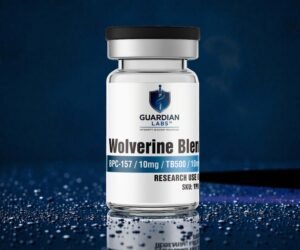
×3 · Wolverine Blend

Structural Repair

10 mg BPC-157 + 10 mg TB-500

BPC-157 drives localized repair — angiogenesis, growth-factor signaling, and tendon, ligament, and gut tissue healing. TB-500 (thymosin β-4 fragment) works systemically, mobilizing repair cells and remodeling actin. One builds the repair infrastructure; the other moves the crew into position.

×3 · CJC-1295 / Ipamorelin

Growth Signal

5 mg CJC-1295 + 5 mg Ipamorelin

A GHRH analog paired with a selective ghrelin mimetic, stimulating growth hormone through two pathways at once for a larger, cleaner pulse. The resulting GH → IGF-1 rise drives protein synthesis, collagen turnover, connective-tissue repair, and improved sleep — without raising cortisol or prolactin.

×3 · NAD+

Cellular Fuel

500 mg per vial

The coenzyme at the center of mitochondrial ATP production, DNA repair, and sirtuin signaling. NAD+ powers the energy-intensive repair cascade the other two compounds initiate — and its levels fall exactly when recovery demand is highest.

§ 03 — Why All Three

A single cascade — four steps, three compounds, one outcome.

i

Repair the Structure

BPC-157 and TB-500 lay down new blood vessels and migrate repair cells into damaged tendon, ligament, muscle, and soft tissue.

ii

Signal the Growth

The GH/IGF-1 pulse from CJC-1295 / Ipamorelin drives protein synthesis and collagen deposition — turning repair signaling into actual tissue.

iii

Fuel the Process

NAD+ sustains the mitochondrial energy and DNA-repair capacity that every step above depends on — the power behind the machinery.

iv

Compound the Effect

Run together over eight weeks, the three layers reinforce one another — structural, hormonal, and cellular recovery advancing in parallel rather than sequence.

On Layering

The rationale for a system over a single compound is coverage. Repair peptides supply the blueprint, GH/IGF-1 supplies the anabolic drive, and NAD+ supplies the energy — three non-overlapping pieces of the same recovery problem. Addressed together, each amplifies the return on the others; addressed alone, each runs into the ceiling the other two would have lifted.

§ 04 — Research Applications

Primary subjects of investigation — strictly laboratory use.

A.01

Soft-Tissue Repair

Studies of tendon, ligament, muscle, and gut healing under combined local and systemic repair-peptide signaling.

A.02

Recovery & Sleep

Research into GH/IGF-1-mediated recovery, sleep architecture, and overnight tissue restoration.

A.03

Connective Tissue

Investigating collagen synthesis, joint and tendon integrity, and the anabolic support of structural remodeling.

A.04

Cellular Resilience

Examining NAD+-dependent mitochondrial energy and DNA-repair capacity as the metabolic floor for recovery.

§ 05 — Scientific References

Peer-reviewed literature supporting the components of this system.

i.

BPC-157 & Tendon Repair

Preclinical research reporting that BPC-157 accelerates tendon-to-bone and ligament healing through angiogenesis and growth-factor pathway activation — the localized half of the Wolverine repair signal.

View on PubMed →
ii.

Thymosin β-4 & Cell Migration

Foundational studies characterizing the actin-binding domain of thymosin β-4 (TB-500) and its role in cell migration, angiogenesis, and anti-fibrotic tissue organization — the systemic half of the repair response.

View on PubMed →
iii.

GHRH + Ghrelin Pathway Synergy

Research demonstrating that co-stimulating the GHRH and ghrelin receptors yields a greater growth-hormone response than either pathway alone — the basis for pairing CJC-1295 with ipamorelin.

View on PubMed →
iv.

Age-Related Decline of NAD+

A foundational study showing tissue NAD+ levels fall substantially with age and metabolic demand, with measurable consequences for mitochondrial function and repair capacity — the rationale for cellular-energy support.

View on PubMed →

§ 06 — Kit Contents & Specifications

Certificate of analysis available upon request for each compound.

System 8-Week Total Recovery System · 9 vials
Wolverine Blend ×3 20 mg each · 10 mg BPC-157 + 10 mg TB-500
CJC-1295 / Ipamorelin ×3 10 mg each · 5 mg CJC-1295 (no DAC) + 5 mg Ipamorelin
NAD+ ×3 500 mg each · β-Nicotinamide Adenine Dinucleotide
Format Lyophilized Powder (Freeze-dried)
Purity > 99% (HPLC Verified)
Storage — Unreconstituted Store at −20°C · Protect from light
Storage — Reconstituted Refrigerate at 2–8°C · Use within ~28 days · Do not freeze
Reconstitution Bacteriostatic Water

Research Use OnlyAll products listed are intended exclusively for laboratory research and development purposes. They are not intended for human consumption, diagnostic, or therapeutic use. Customers must be at least 21 years of age to purchase.
2 in stock

Purchase & earn 579 points!

SKU: GL-8-Week-Bundle Categories: , ,

    Description

    ResearchRecovery ProtocolLot Verified

    8-Week Total Recovery System

    A complete nine-vial research protocol pairing three complementary compounds — tissue-repair peptides, a dual-pathway growth-hormone secretagogue, and the cellular coenzyme NAD+ — to address recovery structurally, hormonally, and at the cellular level across a full eight-week arc.

    9-Vial System> 99% PurityHPLC Verified8-Week Protocol

    9Total Vials
    3Compounds
    8 wkProtocol
    > 99%HPLC Purity

    § 01 — The System

    Recovery is not one problem — so this is not one compound.

    Real tissue recovery unfolds on three fronts at once: the structure has to be rebuilt, the signal to grow has to be present, and the cells doing the work have to be fully powered. Addressing only one of those leaves the process under-resourced. This system supplies all three, together, across an eight-week arc.

    The Wolverine Blend drives structural repair. The CJC-1295 / Ipamorelin stack amplifies growth-hormone and IGF-1 signaling. NAD+ fuels the energy-intensive cellular machinery behind both. Every vial is research-grade, HPLC-verified above ninety-nine percent purity, and lot-verified for reproducible protocol work.

    Tissue repair is energy-expensive and hormone-dependent. Giving repair peptides without the cellular fuel and anabolic signaling to support them is like framing a house with no power to the site.

    § 02 — The Three Pillars

    Three compounds, nine vials — each covering what the others cannot.

    ×3 · Wolverine Blend

    Structural Repair

    10 mg BPC-157 + 10 mg TB-500

    BPC-157 drives localized repair — angiogenesis, growth-factor signaling, and tendon, ligament, and gut tissue healing. TB-500 (thymosin β-4 fragment) works systemically, mobilizing repair cells and remodeling actin. One builds the repair infrastructure; the other moves the crew into position.

    ×3 · CJC-1295 / Ipamorelin

    Growth Signal

    5 mg CJC-1295 + 5 mg Ipamorelin

    A GHRH analog paired with a selective ghrelin mimetic, stimulating growth hormone through two pathways at once for a larger, cleaner pulse. The resulting GH → IGF-1 rise drives protein synthesis, collagen turnover, connective-tissue repair, and improved sleep — without raising cortisol or prolactin.

    ×3 · NAD+

    Cellular Fuel

    500 mg per vial

    The coenzyme at the center of mitochondrial ATP production, DNA repair, and sirtuin signaling. NAD+ powers the energy-intensive repair cascade the other two compounds initiate — and its levels fall exactly when recovery demand is highest.

    § 03 — Why All Three

    A single cascade — four steps, three compounds, one outcome.

    i

    Repair the Structure

    BPC-157 and TB-500 lay down new blood vessels and migrate repair cells into damaged tendon, ligament, muscle, and soft tissue.

    ii

    Signal the Growth

    The GH/IGF-1 pulse from CJC-1295 / Ipamorelin drives protein synthesis and collagen deposition — turning repair signaling into actual tissue.

    iii

    Fuel the Process

    NAD+ sustains the mitochondrial energy and DNA-repair capacity that every step above depends on — the power behind the machinery.

    iv

    Compound the Effect

    Run together over eight weeks, the three layers reinforce one another — structural, hormonal, and cellular recovery advancing in parallel rather than sequence.

    On Layering

    The rationale for a system over a single compound is coverage. Repair peptides supply the blueprint, GH/IGF-1 supplies the anabolic drive, and NAD+ supplies the energy — three non-overlapping pieces of the same recovery problem. Addressed together, each amplifies the return on the others; addressed alone, each runs into the ceiling the other two would have lifted.

    § 04 — Research Applications

    Primary subjects of investigation — strictly laboratory use.

    A.01

    Soft-Tissue Repair

    Studies of tendon, ligament, muscle, and gut healing under combined local and systemic repair-peptide signaling.

    A.02

    Recovery & Sleep

    Research into GH/IGF-1-mediated recovery, sleep architecture, and overnight tissue restoration.

    A.03

    Connective Tissue

    Investigating collagen synthesis, joint and tendon integrity, and the anabolic support of structural remodeling.

    A.04

    Cellular Resilience

    Examining NAD+-dependent mitochondrial energy and DNA-repair capacity as the metabolic floor for recovery.

    § 05 — Scientific References

    Peer-reviewed literature supporting the components of this system.

    i.

    BPC-157 & Tendon Repair

    Preclinical research reporting that BPC-157 accelerates tendon-to-bone and ligament healing through angiogenesis and growth-factor pathway activation — the localized half of the Wolverine repair signal.

    View on PubMed →
    ii.

    Thymosin β-4 & Cell Migration

    Foundational studies characterizing the actin-binding domain of thymosin β-4 (TB-500) and its role in cell migration, angiogenesis, and anti-fibrotic tissue organization — the systemic half of the repair response.

    View on PubMed →
    iii.

    GHRH + Ghrelin Pathway Synergy

    Research demonstrating that co-stimulating the GHRH and ghrelin receptors yields a greater growth-hormone response than either pathway alone — the basis for pairing CJC-1295 with ipamorelin.

    View on PubMed →
    iv.

    Age-Related Decline of NAD+

    A foundational study showing tissue NAD+ levels fall substantially with age and metabolic demand, with measurable consequences for mitochondrial function and repair capacity — the rationale for cellular-energy support.

    View on PubMed →

    § 06 — Kit Contents & Specifications

    Certificate of analysis available upon request for each compound.

    System 8-Week Total Recovery System · 9 vials
    Wolverine Blend ×3 20 mg each · 10 mg BPC-157 + 10 mg TB-500
    CJC-1295 / Ipamorelin ×3 10 mg each · 5 mg CJC-1295 (no DAC) + 5 mg Ipamorelin
    NAD+ ×3 500 mg each · β-Nicotinamide Adenine Dinucleotide
    Format Lyophilized Powder (Freeze-dried)
    Purity > 99% (HPLC Verified)
    Storage — Unreconstituted Store at −20°C · Protect from light
    Storage — Reconstituted Refrigerate at 2–8°C · Use within ~28 days · Do not freeze
    Reconstitution Bacteriostatic Water

    Research Use OnlyAll products listed are intended exclusively for laboratory research and development purposes. They are not intended for human consumption, diagnostic, or therapeutic use. Customers must be at least 21 years of age to purchase.

    Additional information

    Weight .5625 lbs

    Reviews

    There are no reviews yet.

    Be the first to review “8-Week Total Recovery Stack”

    Your email address will not be published. Required fields are marked *