

Description
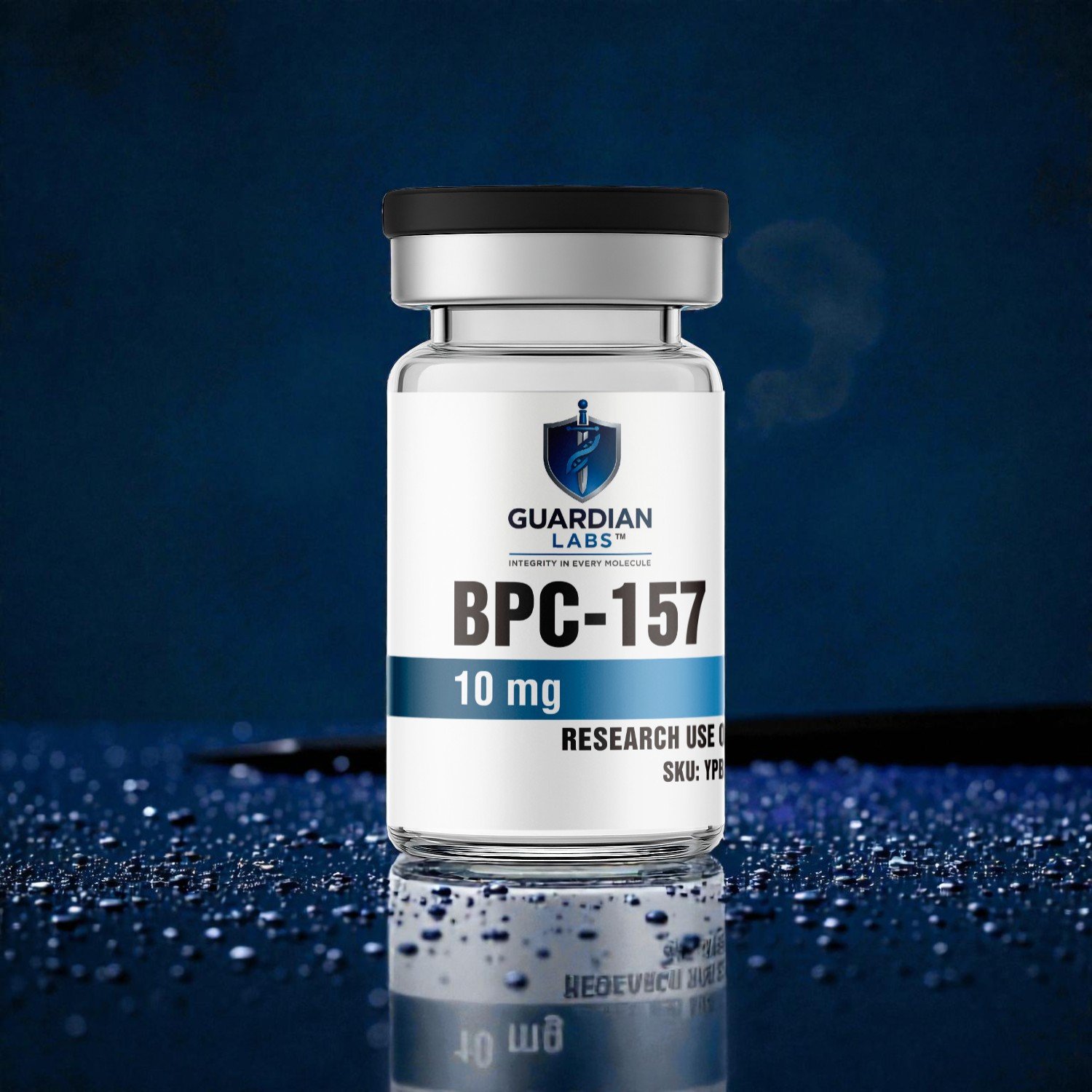
BPC-157
Body Protection Compound
A stable 15-amino-acid pentadecapeptide derived from a protective protein found in human gastric juice — extensively studied for its systemic regenerative and cytoprotective properties.
A pentadecapeptide fragment of a naturally occurring protective protein.
| BPC-157 is a synthetic pentadecapeptide corresponding to a partial sequence of Body Protection Compound, a larger protective polypeptide originally isolated from human gastric juice. Unlike many peptides, it remains remarkably stable across a wide pH range — a property that has made it a subject of extensive investigation in models of systemic injury and recovery. At Guardian Labs, we provide research-grade BPC-157 rigorously tested to ensure purity exceeding ninety-nine percent — ensuring your laboratory data regarding tissue repair and cytoprotection remains accurate and reproducible. | BPC-157 is notable for its apparent activity across multiple organ systems — from gastrointestinal mucosa to tendon, vasculature, and central nervous tissue — suggesting a systemic, rather than tissue-specific, mechanism. |
A convergence of pathways — from vascular formation to neurotransmitter modulation.
iAngiogenic SignallingUpregulates VEGF receptor 2 expression, promoting the formation of new vasculature essential for tissue repair and recovery. | iiNitric Oxide PathwayModulates the NO system, influencing vascular tone, blood flow, and mucosal integrity in models of injury. | iiiGrowth Factor ActivityInteracts with pathways governing fibroblast migration, collagen synthesis, and the formation of granulation tissue. | ivGut-Brain AxisInfluences dopaminergic and serotonergic systems — a proposed link between gastric origin and central nervous activity. |
On Stability
BPC-157 distinguishes itself from most peptides through its resistance to gastric acid hydrolysis and its stability across a wide pH range — a property that has supported its broad use in oral and systemic administration studies across decades of research.
Primary subjects of investigation — strictly laboratory use.
A.01Tissue RepairAccelerated healing in soft tissue and musculoskeletal injury models, including muscle strain and soft-tissue disruption. | A.02Gut & GI TractInvestigations into gastric and intestinal mucosal protection, models of inflammatory bowel injury, and epithelial healing. | A.03Tendon & LigamentStudies of tendon-to-bone healing, ligament repair, fibroblast migration, and collagen matrix remodeling. | A.04AngiogenesisResearch into new blood vessel formation, VEGF pathway activation, and restoration of perfusion in ischemic tissue models. | A.05NeuroprotectionModels examining neuronal recovery, CNS injury, and the modulation of dopaminergic activity via the gut-brain axis. |
Peer-reviewed literature supporting the research potential of this peptide.
| i. | Tendon & Musculoskeletal HealingA seminal investigation into BPC-157 administration in a transected Achilles tendon model reported accelerated tenocyte migration, enhanced cellular outgrowth, and improved functional recovery — establishing the peptide as a focus of ongoing musculoskeletal repair research. | View on PubMed → |
| ii. | Gastrointestinal CytoprotectionA body of research spanning multiple ulcer and colitis models found that BPC-157 administration was associated with accelerated mucosal healing, preserved epithelial integrity, and reduced lesion severity — consistent with its original characterization as a protective gastric peptide. | View on PubMed → |
| iii. | Angiogenesis & VEGF SignallingInvestigators reported that BPC-157 upregulated VEGF receptor 2 expression and promoted new blood vessel formation in injured tissue — a mechanistic finding that helps explain the peptide’s broad activity across organ systems. | View on PubMed → |
| iv. | Central Nervous System EffectsStudies in rodent models have reported that BPC-157 exerts neuroprotective effects and influences dopaminergic neurotransmission — supporting the hypothesis of a functional link between gastric-origin peptides and central nervous activity via the gut-brain axis. | View on PubMed → |
Certificate of analysis available upon request.
| Sequence | Gly-Glu-Pro-Pro-Pro-Gly-Lys-Pro-Ala-Asp-Asp-Ala-Gly-Leu-Val |
| Molecular Formula | C₆₂H₀₀N₁₆O₁₆ |
| Molecular Weight | 1419.55 g/mol |
| CAS Number | 137525-51-0 |
| Format | Lyophilized Powder (Freeze-dried) |
| Vial Size | 10 mg |
| Purity | > 99% (HPLC Verified) |
| Storage | Store at −20°C |
| Reconstitution | Bacteriostatic Water |
Reviews
There are no reviews yet.