

Description
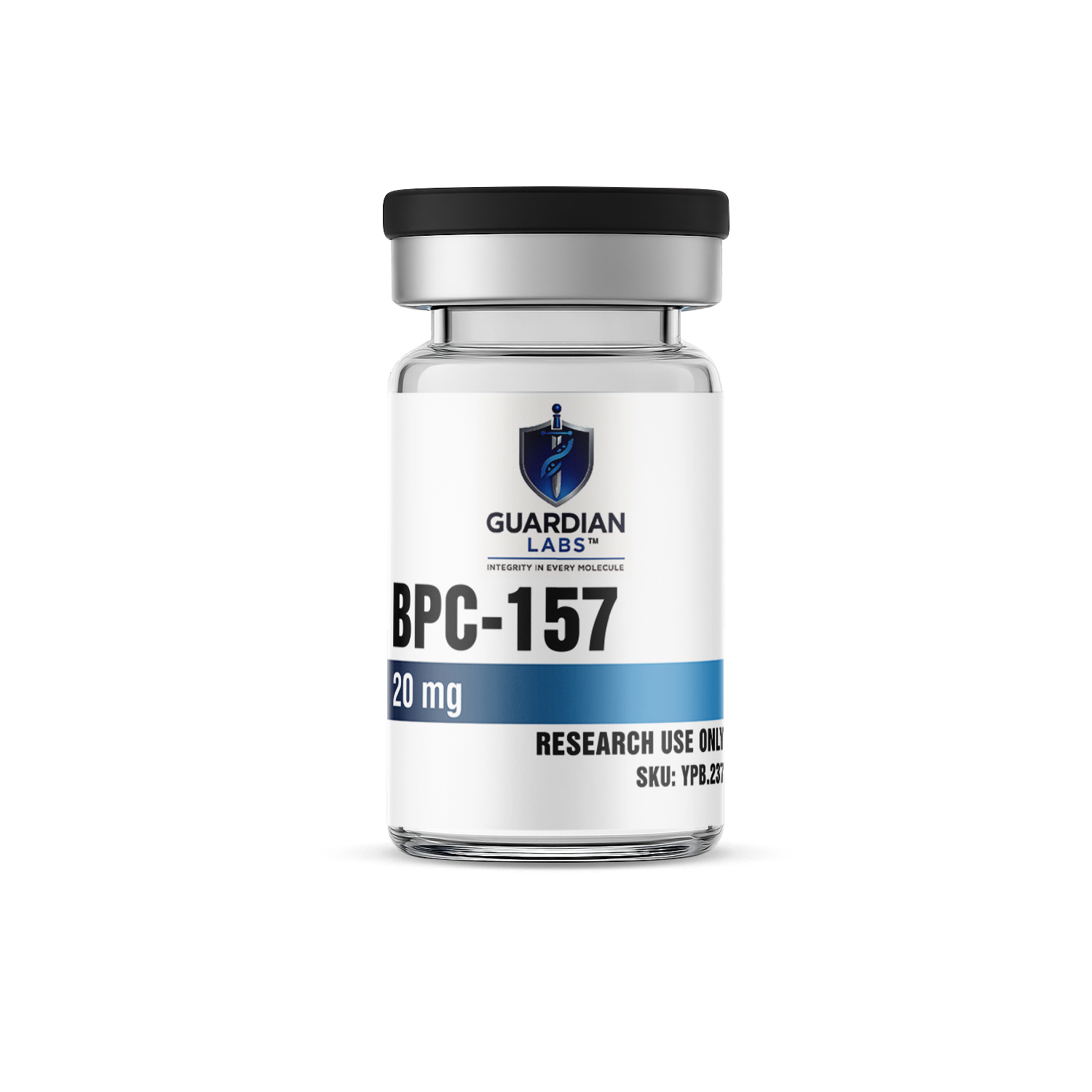
BPC-157 (Body Protection Compound-157)
BPC-157 is a synthetic 15-amino acid peptide derived from a protective protein found naturally in human gastric juice. Scientifically classified as a Pentadecapeptide, it is renowned in the research community for its high stability and potent cytoprotective properties. Unlike many peptides that degrade rapidly, BPC-157 is stable in gastric acid, making it a unique subject for both oral and injectable research models.
At Guardian Labs, we provide BPC-157 in a premium lyophilized format. Every batch is rigorously tested via HPLC to ensure >99% purity, giving researchers a consistent and contaminant-free tool for investigating soft tissue repair and gastrointestinal health.
What is BPC-157?
BPC-157 represents a fragment of the larger Body Protection Compound (BPC) protein. Its sequence (Gly-Glu-Pro-Pro-Pro-Gly-Lys-Pro-Ala-Asp-Asp-Ala-Gly-Leu-Val) is highly conserved and has been identified as the active site responsible for the protein’s healing effects.
Research suggests that BPC-157 acts as a signaling molecule that accelerates the rate of angiogenic repair. It is frequently studied for its ability to “jump-start” the healing process in tissues that traditionally heal slowly, such as tendons, ligaments, and the intestinal lining.
Mechanism of Action
The biological impact of BPC-157 is driven by several key molecular pathways:
-
Angiogenesis (VEGF Modulation): BPC-157 stimulates the expression of Vascular Endothelial Growth Factor (VEGF). This promotes the formation of new blood vessels (angiogenesis), improving oxygen and nutrient delivery to damaged tissue.
-
Nitric Oxide (NO) System Regulation: It interacts with the endothelial Nitric Oxide Synthase (eNOS) pathway. Unique to BPC-157, it acts as a modulator—stimulating NO synthesis in injured tissue while mitigating the effects of excessive NO in inflammatory states.
-
FAK-Paxillin Pathway: In tendon fibroblasts, BPC-157 has been shown to activate Focal Adhesion Kinase (FAK) and paxillin. These proteins are critical for cell migration and adhesion, allowing fibroblast cells to move quickly to the site of injury and begin repair.
-
Growth Hormone Receptor Upregulation: Recent studies indicate that BPC-157 increases the expression of growth hormone receptors on tendon fibroblasts, amplifying the proliferative effects of systemic growth hormone.
Potential Research Applications
BPC-157 is one of the most versatile peptides in current literature. Key areas of investigation include:
-
Soft Tissue Repair: Evaluating the acceleration of healing in transected Achilles tendons, muscle tears, and ligament damage.
-
Gastrointestinal Health: Investigating the peptide’s ability to repair intestinal fistulas and protect the gut lining from NSAID-induced toxicity (e.g., ulcers from ibuprofen/aspirin).
-
Cytoprotection: Researching its systemic protective effects on the liver and brain during periods of high oxidative stress.
Scientific References
To validate the multi-organ protective effects of this peptide, we reference the following pivotal studies.
1. Acceleration of Tendon Healing
Summary: This study examined the effect of BPC-157 on transected Achilles tendons in rats. The results showed that the peptide significantly accelerated the outgrowth of tendon fibroblasts and improved cell survival under stress. The mechanism was identified as the activation of the FAK-paxillin pathway, which drives cellular migration.
2. Healing of Intestinal Fistulas
Summary: Research into gastrointestinal recovery demonstrated that BPC-157 effectively closed colocutaneous fistulas (abnormal connections between the gut and skin). The study highlighted the peptide’s interaction with the Nitric Oxide system, showing it could reverse healing impairments caused by NO-blocking agents.
3. Nitric Oxide System Modulation
Summary: This trial explored how BPC-157 protects against toxicity induced by nitric oxide agonists and antagonists. It found that BPC-157 reduced lesion formation in the liver, spleen, and heart, acting as a “buffer” for the NO system to maintain homeostasis and prevent tissue damage.
Product Specifications
-
Sequence: Gly-Glu-Pro-Pro-Pro-Gly-Lys-Pro-Ala-Asp-Asp-Ala-Gly-Leu-Val
-
Format: Lyophilized Powder (Freeze-dried)
-
Vial Size: 5mg / 10mg
-
Purity: >99% (HPLC Verified)
-
Storage: Store at -20°C. Reconstitute with Bacteriostatic Water.
Disclaimer: All products listed on this site are for laboratory research and development purposes only. They are not intended for human consumption, diagnostic, or therapeutic use. Customers must be at least 18 years old to purchase.

![Thymosin Beta 4 TB-500 peptide vial [10mg]](https://guardianlabs.life/wp-content/uploads/2025/10/YPB.215.png "YPB.215 | Guardian Labs")
Reviews
There are no reviews yet.