

Description
Glutathione (GSH)
γ-L-Glutamyl-L-Cysteinyl-Glycine
The cell’s master antioxidant — a reduced tripeptide of glutamate, cysteine, and glycine that anchors redox balance, drives detoxification, and regenerates the wider antioxidant network.
The most abundant intracellular antioxidant — present in every cell, central to redox life.
| Glutathione is a tripeptide built from glutamate, cysteine, and glycine — with a reactive thiol (–SH) group on its cysteine residue that gives the molecule its defining chemistry. It is the most abundant antioxidant inside the cell, cycling continuously between its reduced (GSH) and oxidized (GSSG) states as it neutralizes reactive species and maintains cellular redox balance.
At Guardian Labs, glutathione is supplied in its reduced form as a research-grade lyophilized powder — HPLC-verified above ninety-nine percent purity and lot-verified — so your oxidative-stress, detoxification, and redox-signaling data remain accurate and reproducible. |
Glutathione is not consumed once and discarded — it is continuously recycled between reduced and oxidized forms, making the GSH:GSSG ratio a primary readout of cellular redox status.
|
Four intersecting functions — where glutathione governs cellular defense.
i
ROS ScavengingThe cysteine thiol directly neutralizes free radicals and reactive oxygen species, donating electrons to quench oxidative damage before it propagates. |
ii
Peroxidase CofactorServes as the electron donor for glutathione peroxidase enzymes, reducing hydrogen and lipid peroxides to water — then recycling from GSSG back to GSH. |
iii
Phase II DetoxConjugates xenobiotics, heavy metals, and reactive electrophiles via glutathione-S-transferases, tagging them for safe elimination from the cell. |
iv
Antioxidant RecyclingRegenerates oxidized vitamins C and E back to their active forms, extending and reinforcing the cell’s broader antioxidant network. |
On the Redox Ratio
The balance between reduced (GSH) and oxidized (GSSG) glutathione is one of the most-studied indicators of cellular health. A high GSH:GSSG ratio signals a well-defended, reducing intracellular environment; its collapse is a hallmark of oxidative stress across aging, metabolic, and neurodegenerative research models — making glutathione a central molecule in redox biology.
Primary subjects of investigation — strictly laboratory use.
A.01
Oxidative StressStudies of redox homeostasis, reactive-oxygen-species handling, and the GSH:GSSG ratio as a marker of cellular defense. |
A.02
DetoxificationResearch into phase II conjugation, xenobiotic and heavy-metal clearance, and hepatic detoxification pathways. |
A.03
Cellular ProtectionInvestigating mitochondrial protection, apoptosis regulation, and glutathione depletion in aging and neurodegenerative models. |
A.04
DermatologicalExamining glutathione’s role in melanogenesis and tyrosinase modulation — a well-studied line in skin and pigmentation research. |
Peer-reviewed literature supporting the research potential of this tripeptide.
| i. |
Glutathione & Redox HomeostasisA foundational review characterizing glutathione as the principal intracellular redox buffer, detailing the GSH:GSSG cycle and its role as the central regulator of cellular oxidative balance. |
View on PubMed → |
| ii. |
Detoxification & ConjugationResearch characterizing the glutathione-S-transferase family and glutathione conjugation as the primary phase II route for clearing electrophiles, xenobiotics, and reactive metabolites. |
View on PubMed → |
| iii. |
Glutathione Depletion & AgingStudies reporting that intracellular glutathione declines with age and metabolic stress, with measurable consequences for mitochondrial function and susceptibility to oxidative injury. |
View on PubMed → |
| iv. |
Glutathione & MelanogenesisInvestigations into glutathione’s modulation of tyrosinase activity and the eumelanin–pheomelanin balance — the mechanistic basis for its role in pigmentation research. |
View on PubMed → |
Certificate of analysis available upon request.
| Chemical Name | L-Glutathione (Reduced) · γ-L-Glutamyl-L-Cysteinyl-Glycine |
| Composition | Tripeptide (Glutamate · Cysteine · Glycine) |
| Molecular Formula | C₁₀H₁₇N₃O₆S |
| Molecular Weight | 307.32 g/mol |
| CAS Number | 70-18-8 |
| Format | Lyophilized Powder (Freeze-dried) |
| Vial Size | 1500 mg |
| Purity | > 99% (HPLC Verified) |
| Storage | Store at −20°C · Protect from light & air |
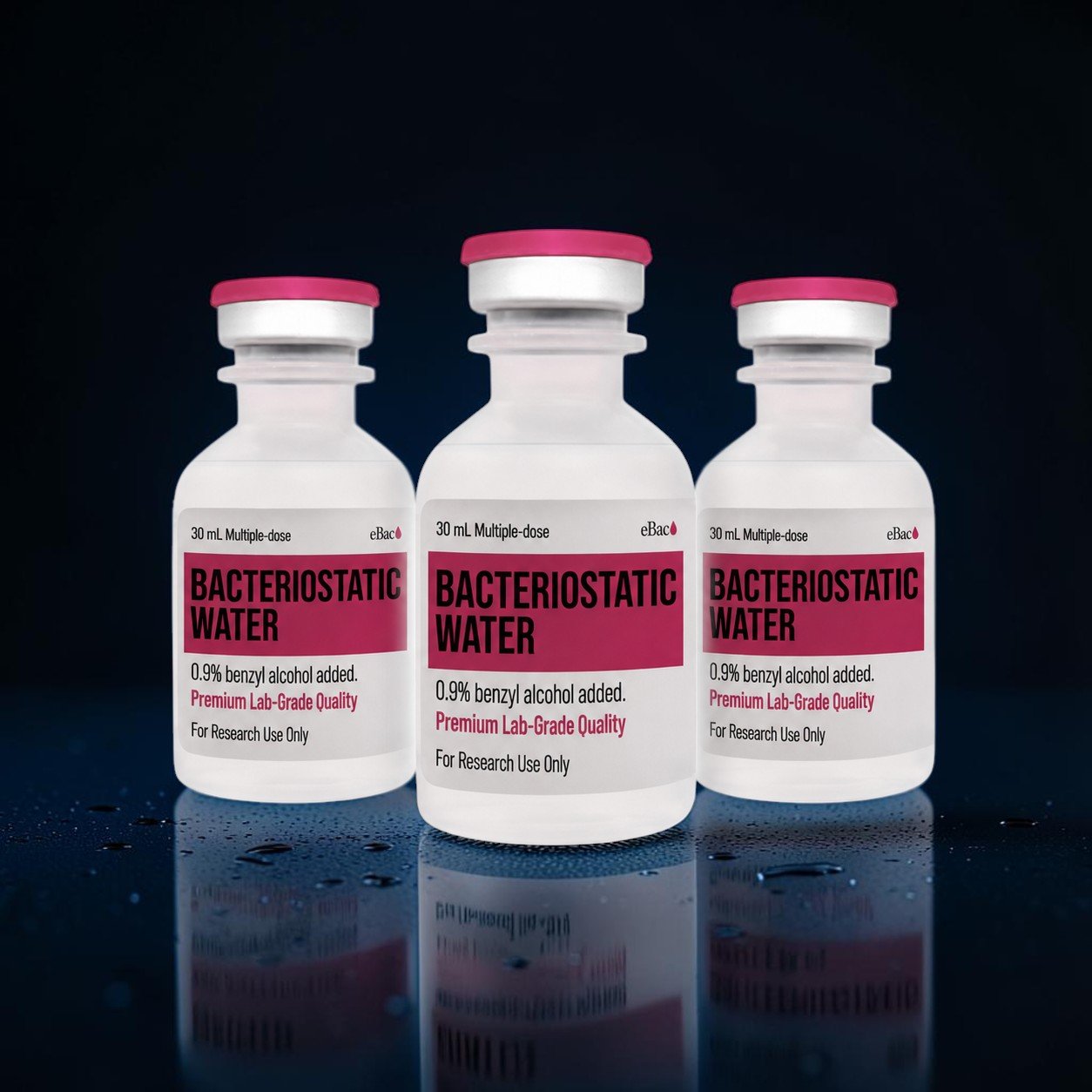
| Reconstitution | Bacteriostatic Water |
All products listed are intended exclusively for laboratory research and development purposes. They are not intended for human consumption, diagnostic, or therapeutic use. Customers must be at least 21 years of age to purchase.
Reviews
There are no reviews yet.