


Description
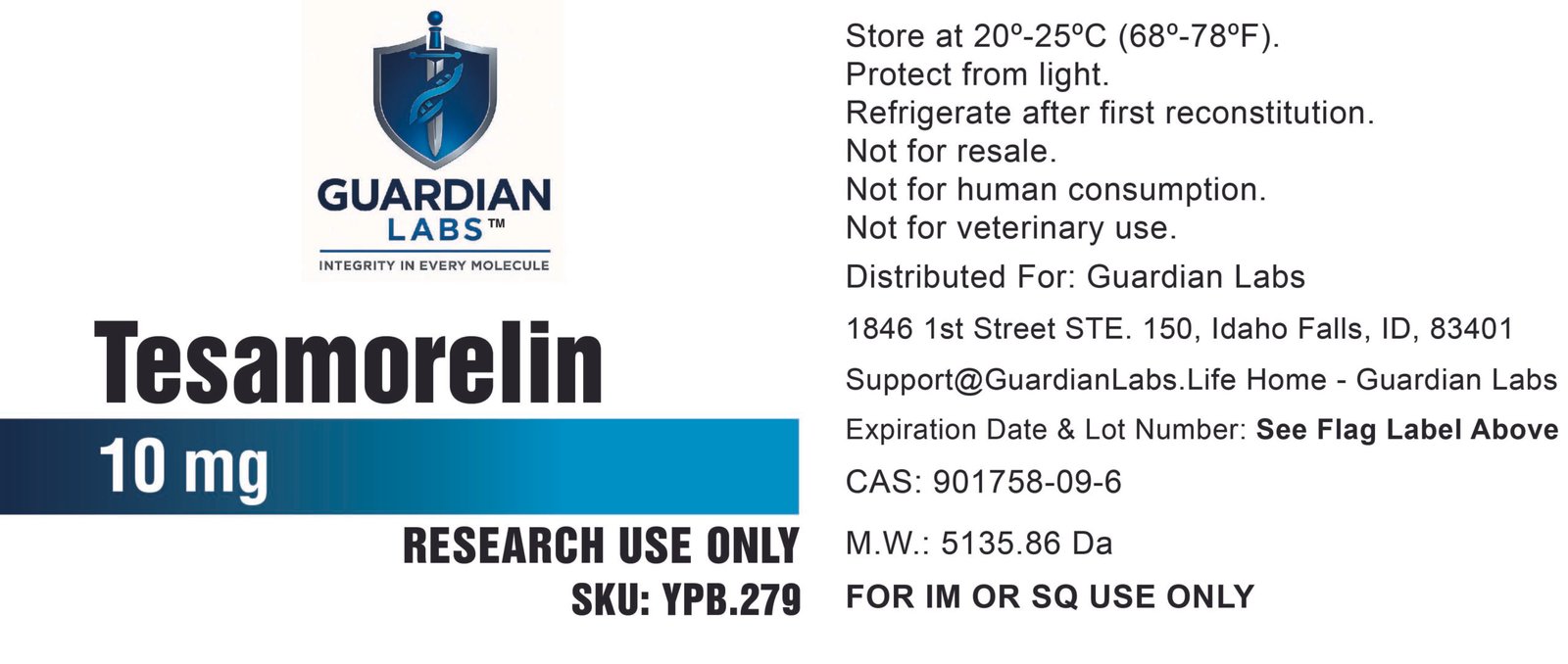
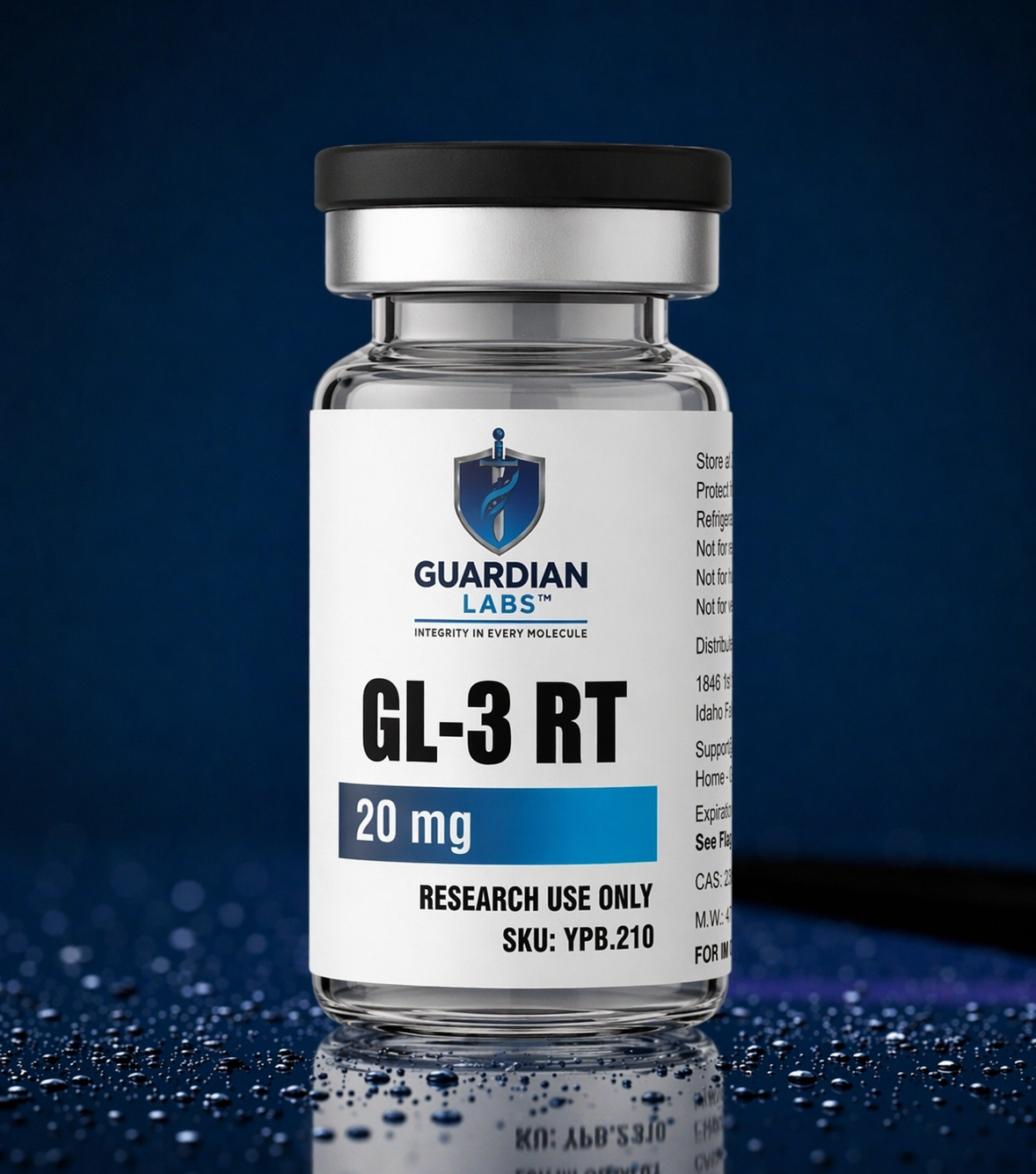
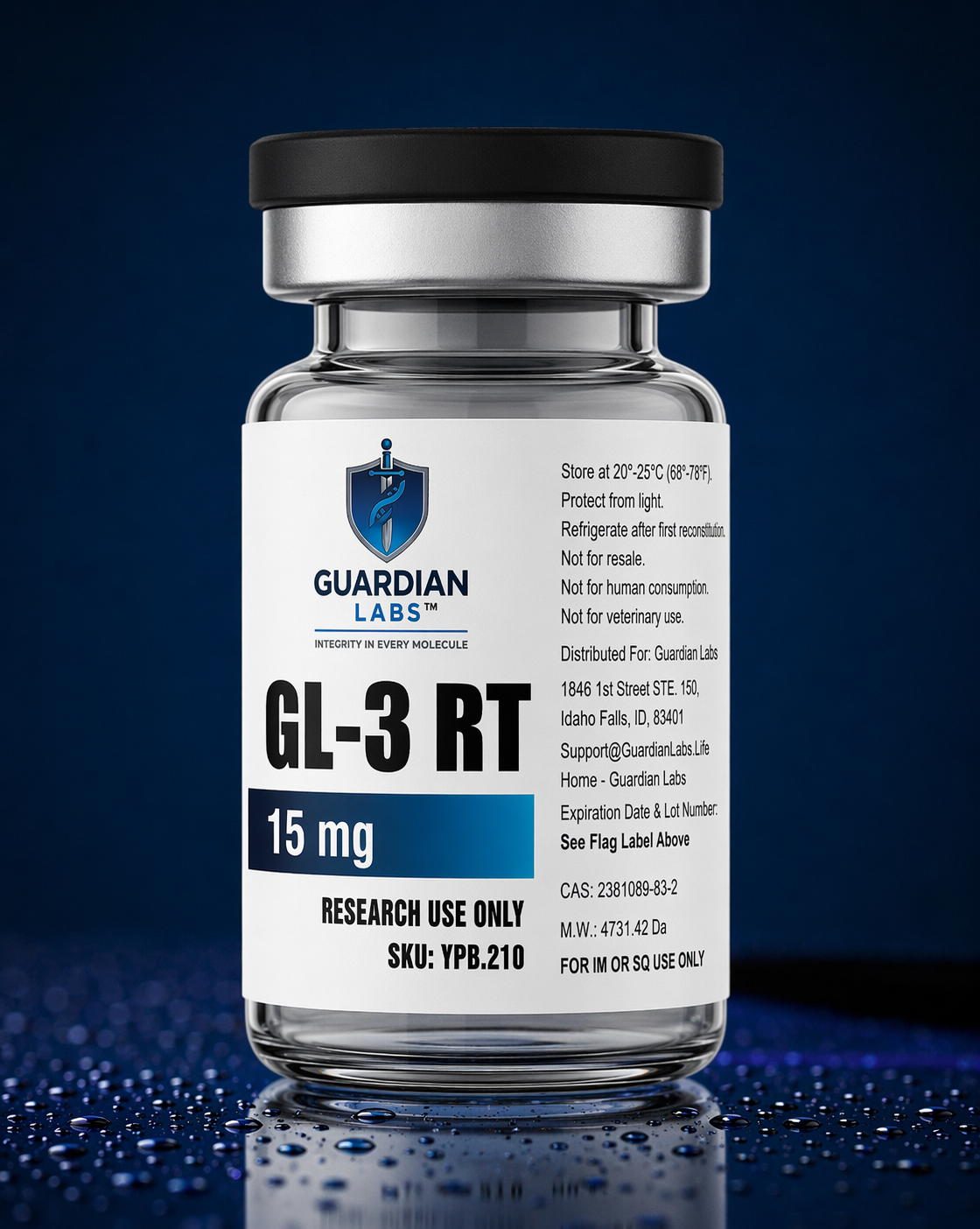
Tesamorelin
trans-3-hexenoyl GHRH
A synthetic 44-amino-acid analogue of growth hormone releasing hormone — modified at the N-terminus for enhanced stability and studied for its selective action on visceral adiposity.
A longer-acting analogue of native GHRH, engineered for specificity.
|
Tesamorelin is widely recognized in the scientific community for its unique ability to stimulate the release of growth hormone with a high degree of specificity. Unlike other GHRH analogues, it has been the subject of extensive clinical research specifically regarding the reduction of visceral adipose tissue. At Guardian Labs, we provide research-grade Tesamorelin rigorously tested to ensure purity exceeding ninety-nine percent — ensuring your laboratory data regarding visceral adiposity and pituitary function remains accurate and reproducible. |
The addition of the trans-3-hexenoyl group allows the peptide to remain active in the system longer than natural GHRH — providing sustained, pulsatile stimulation of the pituitary.
|
A cascade, not a switch — from receptor to response.
i
Receptor BindingTesamorelin acts as a potent agonist of the GHRH receptor on somatotroph cells of the anterior pituitary. |
ii
GH SynthesisUpon binding, the pituitary initiates synthesis and secretion of endogenous growth hormone in a pulsatile pattern. |
iii
Hepatic SignallingCirculating growth hormone triggers the liver to produce IGF-1, the principal downstream mediator. |
iv
Lipolytic ActionThe pulsatile pattern promotes lipolysis preferentially within visceral fat depots. |
On Specificity
Research distinguishes Tesamorelin from peptides such as CJC-1295 due to its documented preference for visceral — rather than subcutaneous — adipose reduction, a finding that has shaped its entire investigative focus.
Primary subjects of investigation — strictly laboratory use.
A.01Visceral AdiposityInvestigating the reduction of deep abdominal fat in metabolic syndrome models, with attention to selectivity against subcutaneous depots. |
A.02Cognitive FunctionResearch into the effects of GHRH analogues on executive function, verbal memory, and models of mild cognitive impairment. |
A.03Muscle QualityStudies analyzing the relationship between reduced myosteatosis — fat infiltration within muscle — and improved muscle density. |
Peer-reviewed literature supporting the research potential of this peptide.
| i. |
Reduction of Visceral Adipose TissueIn a landmark randomized clinical trial involving subjects with abdominal fat accumulation, Tesamorelin administration resulted in a significant reduction in visceral adipose tissue area — without altering subcutaneous fat or body mass index significantly. |
View on PubMed → |
| ii. |
Cognitive Function & MCIThis study examined the effects of GHRH administration on cognitive function in healthy older adults and those with mild cognitive impairment. Results indicated a favorable effect on executive function and verbal memory. |
View on PubMed → |
| iii. |
Improvement in Muscle DensityA secondary analysis of clinical trials found that Tesamorelin treatment was associated with significant increases in paraspinal muscle density — suggesting reduced fat infiltration within muscle tissue. |
View on PubMed → |
Certificate of analysis available upon request.
| Sequence | trans-3-hexenoyl-[Tyr¹]hGRF(1-44)NH₂ |
| Format | Lyophilized Powder (Freeze-dried) |
| Vial Size | 5 mg / 10 mg |
| Purity | > 99% (HPLC Verified) |
| Storage | Store at −20°C |
| Reconstitution | Bacteriostatic Water |
All products listed are intended exclusively for laboratory research and development purposes. They are not intended for human consumption, diagnostic, or therapeutic use. Customers must be at least 18 years of age to purchase.



Reviews
There are no reviews yet.